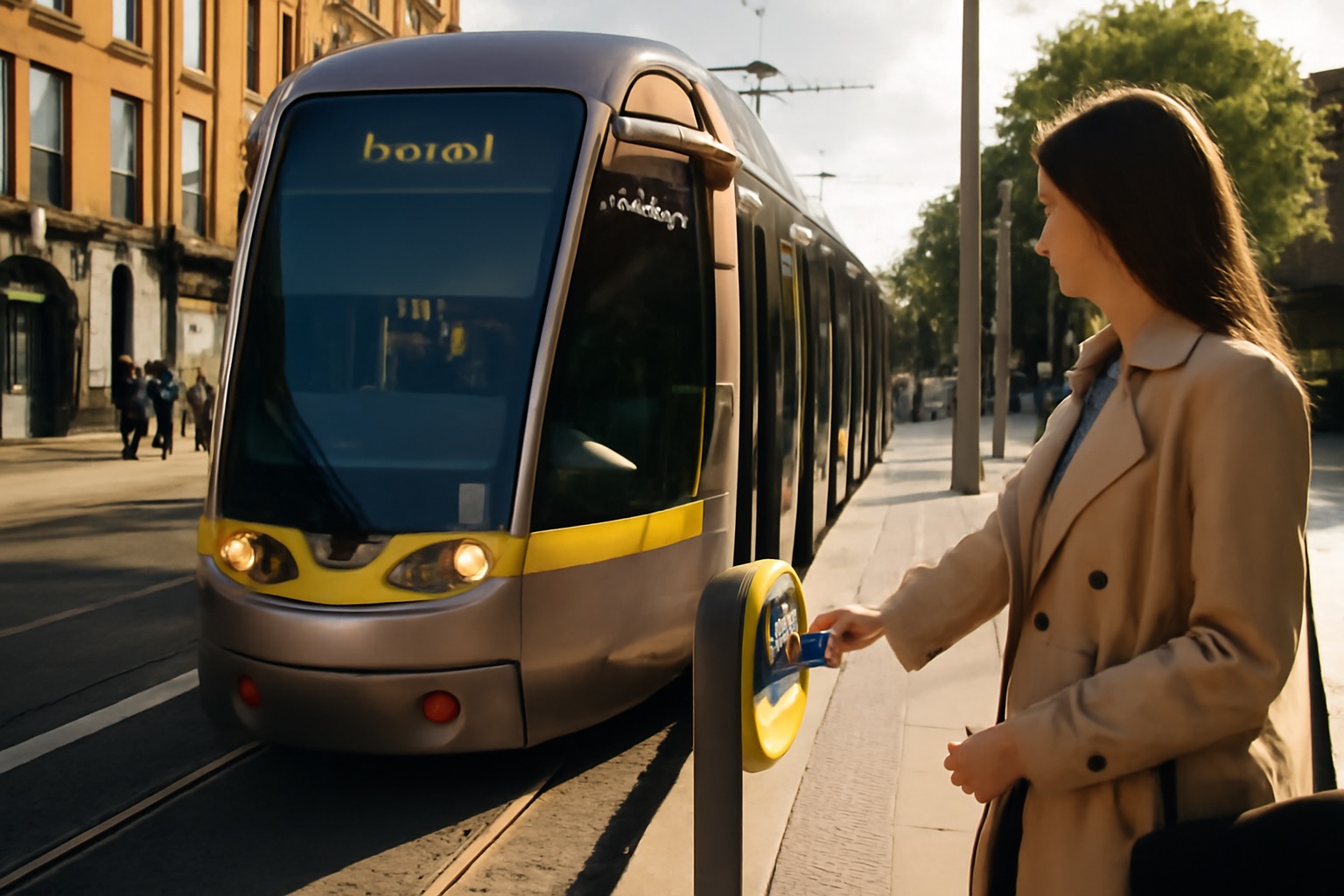
Explore Dublin's public transport with our guide on the Leap Card, LUAS, DART, and Dublin Bus routes and fares.
The Leap Card: Your Key to Dublin's Transport System
The Leap Card is indispensable for navigating Dublin's public transport system, offering seamless travel across Dublin Bus, LUAS, and DART. This reloadable smart card simplifies fare payments and offers substantial savings compared to cash fares. Available at numerous outlets including convenience stores and online, obtaining a Leap Card should be a priority upon your arrival.
One of the most attractive features of the Leap Card is the TFI 90-Minute Fare. This innovative fare structure allows unlimited transfers between buses, LUAS, and DART within a 90-minute window, costing only EUR 2.00 for adults and EUR 1.00 for students. This is particularly beneficial for families who need to make multi-modal journeys across the city.
- Daily cap: EUR 6.00 — ensures all subsequent travel is free for the day.
- Weekly cap: EUR 24.00 — further travel within the week incurs no additional charge.
- No need for exact change — just tap and go.
These caps and the 90-minute fare revolutionise commuting, offering predictability and affordability. It's worth noting that tourists can also use a special Visitor Leap Card, valid for unlimited travel over a set number of days, which can be a convenient option for short-term stays.
Navigating Dublin Bus: Essentials for Newcomers
Dublin Bus forms the backbone of the city's public transport network, with its iconic blue-and-yellow double-decker buses reaching virtually every corner of the metropolitan area. For those unaccustomed to this system, there are key points to remember to ensure a smooth journey. Firstly, buses only stop when hailed, so it's critical to stand visibly at the stop and raise your hand as the bus approaches.
Once aboard, pressing the 'STOP' button before your desired station is essential, as not all buses audibly announce stops. This can catch newcomers unawares, potentially leading to missed stops and extended journeys. The TFI Live App is an invaluable tool here, providing real-time bus locations and route planning.
- Wave to stop — unlike automated systems, you need to signal your intent to board.
- Use the TFI Live App for route tracking and real-time updates.
- Nitelink and 24-hour services offer late-night and round-the-clock travel on key routes.
For families, knowing about the Nitelink service is crucial for weekend plans. Running late into the night, it covers popular routes, though it's less frequent than daytime services. Additionally, recent expansions have introduced 24-hour routes, like the 15 and 41 lines, providing greater flexibility for night-time travel.
Understanding the LUAS Light Rail System
The LUAS light rail system is a fast, efficient way to travel across Dublin, with two main lines serving different parts of the city. The Red Line, connecting The Point to Tallaght or Saggart, and the Green Line, stretching from Broombridge to Brides Glen, are essential for commuting within and beyond the city centre.
One critical aspect of using the LUAS is the tap-on, tap-off requirement. Failing to tap off will result in being charged the maximum fare for the line. It's a simple action, but easy to forget amidst the hustle and bustle of daily travel. Incorporating this into your routine can save you money and frustration.
- Red Line serves the southwestern suburbs and major stations like Heuston.
- Green Line provides access from north to south Dublin, passing major landmarks.
- Always tap on and off to avoid maximum fare charges.
For those living outside the city core, the LUAS connects with suburban buses and DART stations, providing an effective link to wider areas. It's worth noting that during peak hours, LUAS services can become crowded, so allowing extra travel time is advised, especially for those with children or prams.
Exploring Dublin's Coast with the DART
The DART, or Dublin Area Rapid Transit, offers one of the most scenic commutes in the world, hugging the picturesque coastline from Malahide and Howth in the north to Greystones in the south. This service is indispensable for families residing or attending schools in coastal suburbs, offering regular and reliable connections to central Dublin.
One of the DART's advantages is its allowance of free bicycle transport during off-peak hours. This feature is particularly beneficial for cyclists, providing a seamless integration of rail and cycling for eco-friendly commuting. However, it's essential to note that DART services, while frequent during rush hours, lessen in frequency during evenings and weekends.
- Spans the coast, offering stunning views of Dublin Bay.
- Free bike transport during off-peak times enhances accessibility.
- Schedules thin out in the evenings, so plan accordingly.
For new residents, the DART not only serves as a commuter train but also as a gateway to some of the most charming coastal towns and villages around Dublin. Places like Dun Laoghaire, with its vibrant harbour, or the historic Dalkey, are just a short ride away, making weekend explorations easy and enjoyable.
Practical Tips for Daily Commuting
Effective commuting in Dublin requires more than just knowing the routes; it's about understanding the nuances of the public transport system and how to make the most of it. A key recommendation is to always check the TFI (Transport for Ireland) Live App before heading out. This app not only provides real-time updates but also helps you plan your journey across multiple modes of transport seamlessly.
An important factor to consider is Dublin's unpredictable weather. Having an umbrella or raincoat handy is advisable, as rain can often be sudden and heavy. The city's transport system is generally reliable, but weather conditions can occasionally cause delays, particularly with buses.
- Use the TFI Live App for planning and real-time updates.
- Prepare for weather changes; carry an umbrella during rainy seasons.
- Consider peak hour travel times to avoid overcrowded services.
Understanding peak travel times is also crucial for a smoother journey. Buses and LUAS services can become overcrowded during morning and evening rush hours, so travelling slightly earlier or later can make a significant difference in comfort and ease.
Comparing Dublin with Other Cities
When comparing Dublin's public transport with other European cities like London or Paris, a few differences stand out. Dublin's network is smaller and less complex, which can be an advantage for newcomers who may find it easier to navigate. However, the frequency of services is generally lower, particularly when compared to London's Underground or Paris' Metro.
The Leap Card system offers a simplicity that is often lauded by international visitors. Unlike London's Oyster Card, the Leap Card caps daily and weekly spending across all transport modes, providing financial predictability. Additionally, Dublin's extensive bus network, while comprehensive, lacks the same level of night service found in cities like Berlin.
It's also worth noting that Dublin's transport is heavily reliant on buses, which can be affected by road traffic, whereas cities with more developed rail systems face fewer such issues. For families accustomed to the speed and frequency of subways, adjusting to Dublin's pace might require some patience.
Overall, while Dublin's system may not match the scale of larger cities, its coverage and affordability, especially with the Leap Card, offer a unique balance of convenience and cost-effectiveness. Newly arrived families should embrace the quirks and nuances as part of their Irish experience.
Challenges and Future Improvements
While Dublin's public transport system offers many advantages, it is not without its challenges. Congestion during peak hours remains a significant issue, with buses and LUAS often running at full capacity. Infrastructure limitations mean that expansion is slow, and while projects like the MetroLink promise improvements, they are still years away from completion.
Families new to Dublin should be prepared for these realities and plan accordingly. For instance, children may find the crowding daunting, so travelling off-peak when possible can ease the adjustment. Moreover, understanding the timing and routes of less crowded services can enhance the commuting experience.
On the positive side, Dublin is actively working on enhancing its public transport network. Initiatives like the BusConnects programme aim to improve bus frequency and coverage, while future rail projects are intended to ease congestion and provide more direct routes across the city.
Ultimately, while there are hurdles to overcome, the public transport system is evolving, and families settling in Dublin can look forward to gradual yet meaningful improvements. By staying informed about upcoming changes, you can better anticipate and adapt to future developments, ensuring that your commute remains as efficient and comfortable as possible.
About Peterson Family Office
Peterson Family Office Limited was established in Dublin in 2022, serving high-net-worth international families with a focus on education pathway planning, tax advisory, and long-term family strategy. Our philosophy — Professional · Disciplined · Long-term Commitment — guides every aspect of our work. We combine deep knowledge of the Irish and European landscape with a genuine understanding of the needs of families relocating from Asia and beyond.
Our three core service areas — Education Pathway Planning, the 1+1 Dual Mentorship System, and Family Office Services — work together to support families at every stage of their journey in Ireland. To learn more about how we can help your family, visit About Peterson Family Office.
Related Articles

Navigating Dublin's Best Family Neighbourhoods
Discover the top Dublin neighbourhoods for international families, complete with schools, amenities, and lifestyle tips.
Ireland Monthly Weather Breakdown for Relocating Families
Prepare for Ireland's monthly weather changes. Detailed guide for relocating families with real-world examples.
Seasonal Activities for Families in Ireland
Discover diverse seasonal activities in Ireland for families, enhancing your relocation experience with cultural and recreational events.