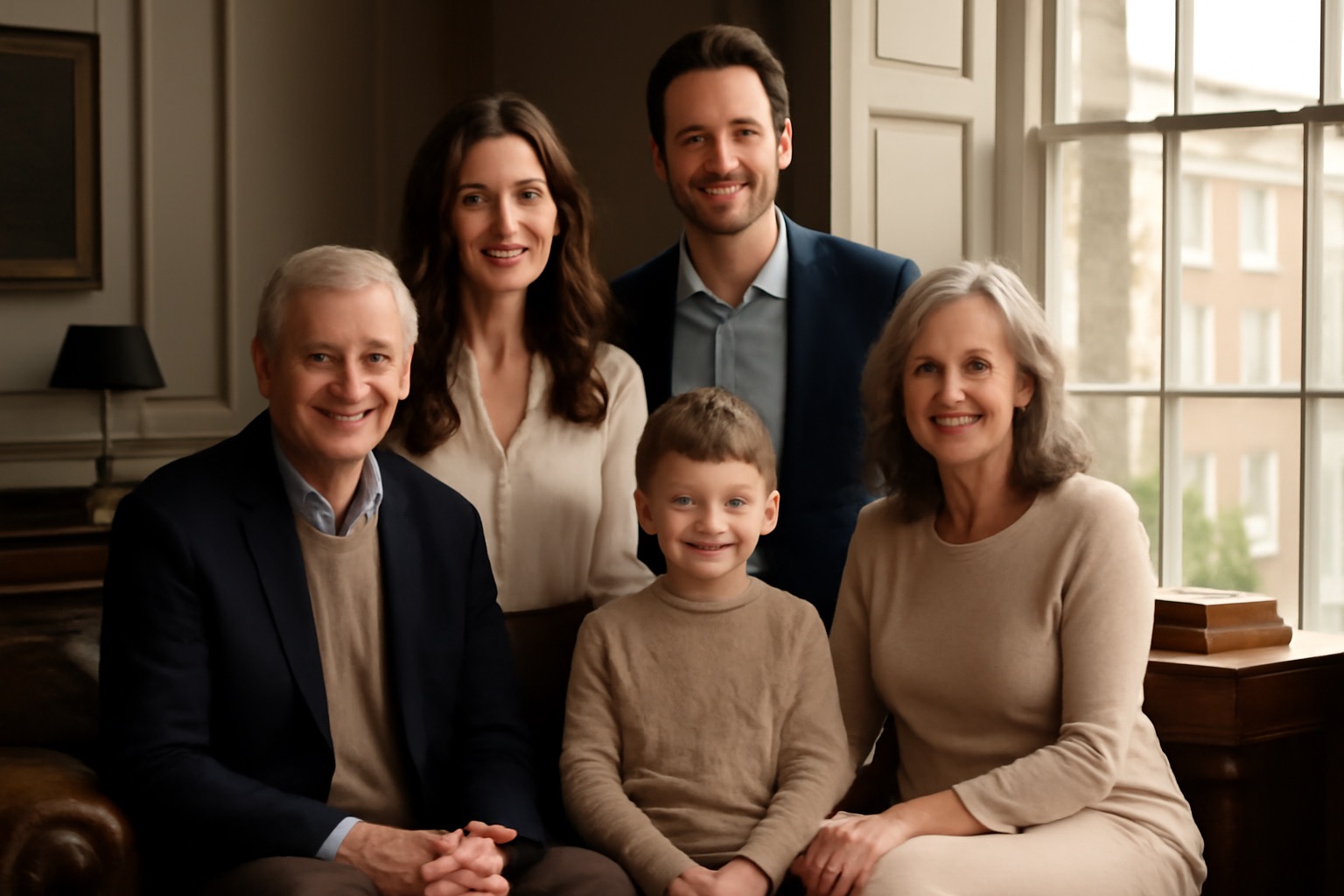
Explore how education planning intertwines with business, tax, and legacy strategies for enduring family prosperity.
The Strategic Role of Education in Family Legacy
For families with foresight, education is more than just a stepping stone for individual success—it's a strategic tool for sustaining family legacy across generations. Education imparts not only knowledge but also the values, judgement, and adaptability necessary for effective stewardship of family wealth. The harsh reality is that without this preparation, family wealth often dissipates by the third generation. Education, therefore, is not just a personal milestone but a strategic investment in continuity.
The aim is to cultivate the capabilities necessary for managing complex family affairs. This includes technical skills, analytical thinking, and the ability to navigate cultural and social nuances. Families focusing solely on academic grades may miss out on these broader benefits, which are critical for long-term sustainability. Education should be seen as an investment in human capital—equipping the next generation with the tools they need to make informed decisions, steward assets responsibly, and lead with integrity.
Business Structures and Their Educational Connection
In Ireland, the favourable business climate offers international families a strategic base for structuring their enterprises. The country's regulatory environment, coupled with its EU membership, provides a robust platform for family business activities. Establishing an Irish holding or trading company can serve as a vehicle for international asset allocation and corporate governance, both of which are critical for legacy planning.
- International Asset Allocation: Ireland's network of double taxation agreements facilitates efficient cross-border management.
- Corporate Governance: Irish company law offers a transparent and regulated framework, crucial for legal certainty and operational transparency.
- Generational Transition: Business structures such as trusts can be tailored for seamless transfer of wealth across generations.
For the younger generation to manage these complexities, their education must include a strong foundation in finance, law, and business administration. This knowledge ensures they understand the significance and mechanics of these structures, enabling them to maintain and grow the family legacy.
Tax Planning: Integrating Education and Financial Strategy
Tax planning is a critical aspect of family strategy that intersects significantly with education planning. Ireland's tax landscape, shaped by its EU membership and global agreements, provides both opportunities and complexities. Understanding this environment is crucial for strategic asset allocation, investment decisions, and residency planning.
Education itself represents a significant financial undertaking. Tuition and associated costs must be planned for, considering their impact on broader financial strategies. Proper tax planning can help mitigate these expenses and ensure education remains a sustainable investment. This includes understanding the tax treatment of education expenses and considering alternative funding sources.
Importantly, families should avoid overly aggressive tax strategies that could compromise their financial standing. The emphasis should be on compliance and long-term stability rather than short-term gains. Partnering with knowledgeable advisors ensures that tax strategies are effective, compliant, and aligned with the family's legacy goals.
Family Governance: Ensuring Cohesion and Alignment
A well-defined family governance structure is essential for maintaining harmony and direction across generations. This framework is where education's role becomes pivotal, as it equips family members with the skills and understanding needed to participate effectively in governance processes. Without proper governance, even well-educated family members may struggle to maintain alignment.
- Family Constitution: This document articulates the family's mission, values, and principles, providing a reference for decision-making.
- Formal Structures: Councils or boards that include family members can facilitate transparent and inclusive decision-making.
- Dispute Resolution Mechanisms: These help in managing conflicts and maintaining unity.
For family governance to be successful, education must encompass not only business and financial acumen but also leadership and negotiation skills. These abilities enable family members to contribute meaningfully to governance discussions and uphold the family's legacy.
Generational Succession: Preparing for the Future
Succession planning is a critical component of ensuring family legacy, and education plays a central role in its success. Preparing the next generation for leadership involves more than just knowledge transfer; it requires cultivating the ability to innovate and adapt to changing circumstances. The future leaders of a family enterprise need to be equipped with a broad spectrum of skills and experiences.
Education in this context should include exposure to international markets and diverse cultural perspectives, aligning with the global nature of many family businesses. Programmes that combine academic learning with practical experience, such as internships and mentorships, are invaluable. They provide young family members with real-world insights and the opportunity to apply their learning in a practical setting.
Ultimately, successful succession relies on a clear plan that is communicated and understood across the family. This plan should outline the roles and expectations for upcoming leaders and provide a roadmap for their development. Education is the foundation upon which this roadmap is built, ensuring that the family’s legacy is not only preserved but also enhanced with each generation.
Integrating Education with Broader Family Strategy
To fully realise the potential of education in family legacy planning, it must be integrated into the broader family strategy. This includes aligning educational goals with business objectives, tax planning, and generational transition plans. Families should view education as a continuous journey, one that evolves with their needs and circumstances.
One practical approach is to establish a family education fund, dedicated to supporting the educational aspirations of current and future generations. This fund can be structured to provide resources for formal education, skill development, and experiential learning opportunities. Ensuring that the fund is well-managed and aligned with the family’s long-term goals requires careful planning and regular reassessment.
Incorporating family members in strategic discussions about their educational pathways fosters a sense of responsibility and ownership. This involvement helps them understand the interconnectedness of education with other facets of the family’s strategic plan, reinforcing the importance of their role in preserving and advancing the family legacy.
Challenges and Opportunities in Legacy Planning
While the strategic integration of education into family legacy planning offers substantial benefits, it also presents unique challenges. These include balancing diverse educational needs within the family, managing cultural differences, and dealing with varying levels of interest and capability among family members. Recognising and addressing these challenges early on is crucial for ensuring the success of legacy planning efforts.
Opportunities lie in leveraging Ireland’s strong educational infrastructure and business-friendly environment to support family objectives. Institutions such as Trinity College Dublin and University College Dublin offer world-class education and networking opportunities, essential for developing future leaders.
Families should also consider the role of technology in education, exploring digital learning platforms and resources that can complement traditional educational pathways. By staying attuned to emerging trends and remaining flexible in their planning, families can not only overcome potential obstacles but also enhance their legacy with innovative approaches and new opportunities.
About Peterson Family Office
Peterson Family Office Limited was established in Dublin in 2022, serving high-net-worth international families with a focus on education pathway planning, tax advisory, and long-term family strategy. Our philosophy — Professional · Disciplined · Long-term Commitment — guides every aspect of our work. We combine deep knowledge of the Irish and European landscape with a genuine understanding of the needs of families relocating from Asia and beyond.
Our three core service areas — Education Pathway Planning, the 1+1 Dual Mentorship System, and Family Office Services — work together to support families at every stage of their journey in Ireland. To learn more about how we can help your family, visit About Peterson Family Office.
Related Articles
Affordable Childcare Options for Working Parents in Dublin
Explore top affordable childcare options in Dublin for working parents, including quality preschools and after-school programs.
Childcare Facilities for Global Families in Dublin
Explore tailored childcare options in Dublin for international families, ensuring a smooth cultural transition.

Ireland University Admission Success Stories: Real Student Journeys
Discover real Ireland university admission success stories with students gaining entry to top institutions like Imperial and Oxford through strategic planning.