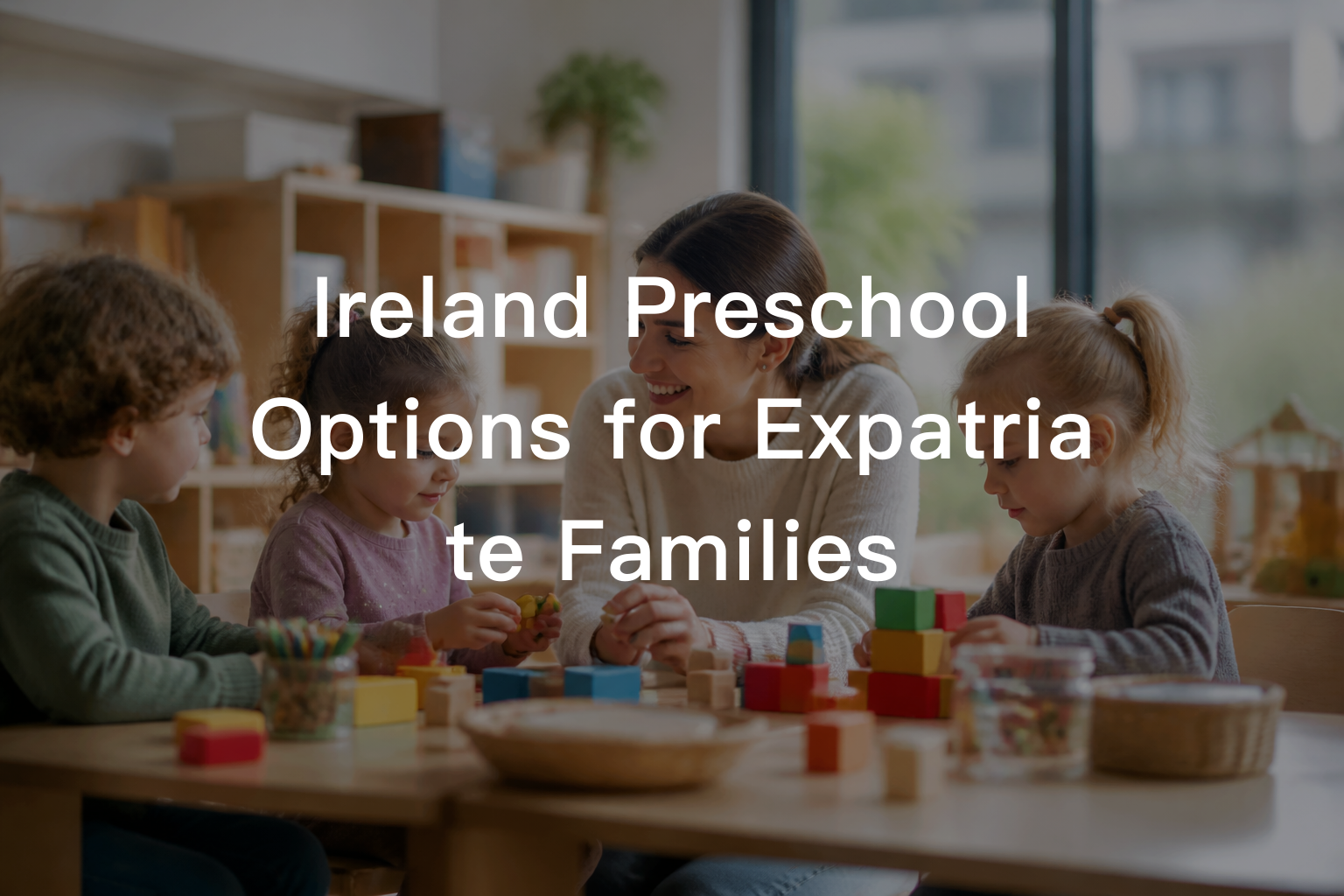
Explore top preschool options in Ireland for expatriate families, focusing on Dublin's high-quality early education.
Understanding the Irish Preschool System
For expatriate families settling in Ireland, understanding the preschool system is a crucial step in ensuring a smooth transition for young children. In Ireland, early childhood education and care involve a mix of public and private options, broadly classified under the Early Childhood Care and Education (ECCE) scheme. The ECCE is a government-funded programme providing free preschool education for children aged 2 years and 8 months until they start primary school or reach the age of 5 and a half.
One key aspect expatriate families should note is that the ECCE scheme allows for up to three hours of free preschool education per day, five days a week, over a 38-week period. However, many preschools offer extended hours or additional services at extra cost, catering to working parents or those seeking enriched educational experiences. Understanding these nuances will help in selecting the right fit for your child.
While the government funds a significant portion of preschool education, the quality and availability of services can vary. The demand in major urban areas like Dublin is particularly high, which might require early registration. It is advisable for expatriate families to start researching and contacting preschools as soon as the move to Ireland is confirmed.
Navigating Preschool Choices in Dublin
Dublin, being the capital city, offers a variety of preschool options catering to different needs, including bilingual programmes, Montessori methods, and Reggio Emilia-inspired approaches. For expatriate families, particularly those from non-English-speaking backgrounds, preschools offering language support or bilingual instruction might be preferable.
Among the notable preschools in Dublin is the International Montessori School, which provides a curriculum that blends the Montessori method with language immersion, making it an excellent choice for expatriate families. Fees here range between €8,000 and €12,000 annually, depending on the programme chosen. Little Darlings Childcare is another popular option, offering both ECCE scheme participation and extended hours for working parents, with fees starting at approximately €6,000 per year for extended hours.
Choosing the right preschool involves balancing several factors: educational philosophy, proximity, hours of operation, and, crucially, cost. While Dublin’s options are diverse, these considerations will help narrow down the choices to those that best fit your family's needs.
Financial Considerations and Fee Structures
Understanding the financial implications of preschool education in Ireland is crucial for expatriate families planning their budget. While the ECCE scheme provides for free preschool education, it typically covers only the basic three-hour daily programme. Additional hours, which many working parents require, will incur fees.
Preschools in Dublin can vary widely in terms of cost. While some offer affordable rates aligned with the basic ECCE provision, others charge premium fees for extended hours and additional services. For example, the Giraffe Childcare centres, which have several locations across Dublin, offer both ECCE and extended hours. Their fees for additional hours can range from €7 to €12 per hour, which can add substantially to annual education costs.
Additionally, expatriate families should be aware that some preschools require deposits or yearly registration fees, which can range from €100 to €500. It is essential to inquire about all potential costs upfront to avoid surprises and to help manage the family's financial planning effectively.
Cultural and Educational Considerations
Expatriate families often seek preschools that not only provide educational value but also align with their cultural and linguistic needs. Many Dublin preschools cater to international families by offering multicultural and multilingual environments, which can be particularly beneficial for children in maintaining their native language while acquiring English.
The Lycée Français d'Irlande, for example, offers a French curriculum with bilingual English-French instruction, catering primarily to the French-speaking community but also appealing to international families. Such environments can ease the cultural transition for children, making them feel more at home in a new country.
Additionally, engaging with the expatriate community can provide invaluable insights. Many families find it helpful to join local expatriate forums or social media groups where they can exchange recommendations and experiences about Dublin preschools that have successfully supported international transitions.
Visa and Registration Requirements
Visa and registration requirements are another critical aspect expatriate families must consider when enrolling their children in preschools in Ireland. Non-EU/EEA families need to ensure that they have the appropriate visas and permissions to stay in Ireland. This includes obtaining the Irish Residence Permit (IRP), which is a legal requirement for stays longer than 90 days.
- Workers on employment permits must ensure their children are included in their visa arrangements.
- Full-time students may need to verify whether their visa conditions allow for dependents' education.
- Families should also be aware of any specific documentation preschools require, such as birth certificates or proof of vaccinations.
It is advisable to begin this paperwork early, as delays in obtaining the necessary documentation can complicate the enrolment process and potentially limit available spots in desired preschools.
Preparing for Preschool Transition
Preparing for a smooth preschool transition involves more than just selecting the right institution. It is about getting the child ready emotionally and socially for this new experience. Expatriate families often find the transition easier when they prepare their children by discussing what to expect, visiting the preschool together, and even attending orientation days if available.
Building a routine that mirrors the preschool schedule can also help children adjust. For example, introducing similar activities or meal times at home can make the transition less daunting. Many preschools in Dublin offer open days or settling-in sessions, which can alleviate first-day anxieties and provide a glimpse into the daily routine.
Incorporating cultural elements from home into this preparation can offer comfort, grounding the child in both their expatriate identity and their new Irish environment. This approach not only prepares the child but also involves the whole family in the adaptation process, creating a supportive network for the young learner.
Common Challenges and Solutions
Even with thorough preparation, expatriate families may encounter challenges when navigating the Irish preschool system. Common issues include language barriers, adapting to new educational methods, and managing administrative requirements.
Language support is often available in international and bilingual preschools, but for those attending local institutions, families might consider additional language classes or tutoring to support their child's integration. Moreover, understanding the educational philosophies of Irish preschools, such as play-based learning, can help parents align their expectations and support their child’s learning at home.
Administrative hurdles, such as securing a spot in a high-demand area like Dublin, can be mitigated by early registration and keeping abreast of application deadlines. Engaging with a local advisor or consultant familiar with the Irish education landscape can provide tailored support and insights, easing the transition for international families.
About Peterson Family Office
Peterson Family Office Limited was established in Dublin in 2022, serving high-net-worth international families with a focus on education pathway planning, tax advisory, and long-term family strategy. Our philosophy — Professional · Disciplined · Long-term Commitment — guides every aspect of our work. We combine deep knowledge of the Irish and European landscape with a genuine understanding of the needs of families relocating from Asia and beyond.
Our three core service areas — Education Pathway Planning, the 1+1 Dual Mentorship System, and Family Office Services — work together to support families at every stage of their journey in Ireland. To learn more about how we can help your family, visit About Peterson Family Office.
Related Articles
Ireland Long-Stay Visa Requirements for Families
Discover detailed requirements for Ireland's long-stay visas for international families, focusing on education, tax, and living considerations.
Understanding the Types of Irish Family Visas
Explore Irish family visas: essential info for high-net-worth families relocating to Ireland.
Ireland Investment Visa Programme for Families: A Pathway to Residency
Explore Ireland's investment visa programme for high-net-worth families seeking residency through financial commitments.