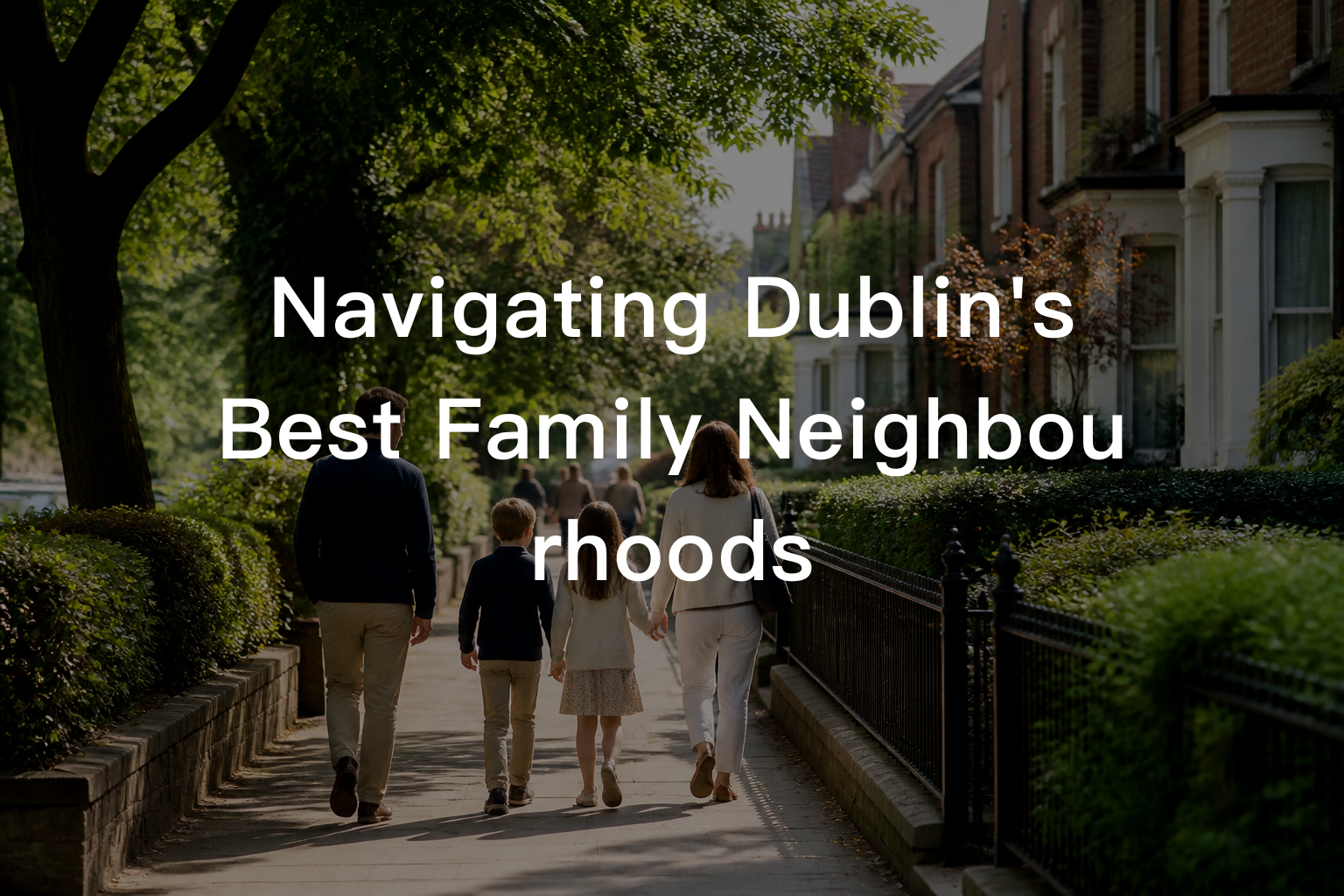
Discover the top Dublin neighbourhoods for international families, complete with schools, amenities, and lifestyle tips.
Understanding Dublin's Family-Friendly Neighbourhoods
When moving to Dublin as an international family, choosing the right neighbourhood is crucial for ensuring a comfortable transition. Dublin offers a diverse range of family-friendly areas, each with its own unique characteristics that cater to different lifestyle needs. From bustling urban settings to tranquil suburbs, the choices can seem overwhelming. This guide will help you navigate these options to find the ideal neighbourhood for your family.
International families often prioritise access to high-quality education, green spaces, and community services. Dublin features a range of neighbourhoods that meet these criteria, including Blackrock, Rathmines, and Clontarf, each known for their excellent schools and vibrant community life. Understanding what each area offers can significantly ease the relocation process.
Families should also consider proximity to public transportation and amenities like shopping centres and healthcare facilities. Dublin's efficient public transport network, including DART and Luas lines, connects many neighbourhoods, making commuting straightforward. Additionally, areas like Dundrum and Stillorgan boast extensive shopping options, ensuring convenience for day-to-day needs.
Educational Opportunities in Dublin's Neighbourhoods
Education is a top priority for families relocating to Dublin, and the city doesn't disappoint with its array of reputable schools. For instance, Blackrock College and Loreto College in St. Stephen’s Green are esteemed institutions offering robust academic programmes. These schools are particularly popular among international families for their emphasis on academic excellence and extracurricular activities.
Fee structures in Dublin can vary considerably. Private schools like St. Andrew's College in Booterstown charge fees ranging from €6,000 to €10,000 annually. Such institutions often offer International Baccalaureate programmes, adding global recognition to their curriculum. Meanwhile, public schools, which are funded by the government, do not charge tuition fees but may request voluntary contributions for additional resources.
- St. Andrew's College: €6,000 - €10,000 per year
- Blackrock College: Renowned for its rugby programme
- Loreto College: Strong focus on academic excellence
For families interested in integrating their children into the local community, Dublin's Gaelscoileanna (Irish-speaking schools) provide a unique cultural immersion experience. These schools cater to the growing demand for education through the medium of Irish language, offering an authentic Irish experience.
Cost of Living Considerations
Living in Dublin can be an expensive affair, but with careful planning, international families can manage their budgets effectively. Housing, in particular, represents a significant portion of living expenses. Areas like Sandymount and Ranelagh are highly sought after, driving up rental and property prices. A three-bedroom home in these areas might cost upwards of €3,000 per month in rent.
Families should also account for additional costs such as utilities, transportation, and groceries. Utilities, including electricity and heating, can average around €150 per month, while transportation costs depend on the extent of commutes. Dublin's Leap Card system offers discounts on public transport, which can be a cost-effective option for daily travel.
- Sandymount: High rental prices but excellent amenities
- Ranelagh: Vibrant community with higher living costs
- Leap Card: Discounted public transit fares
To mitigate these expenses, families may consider living slightly further from the city centre, where rental prices are more moderate. Suburbs like Lucan and Blanchardstown offer affordable housing options, along with great schools and community facilities.
Visa and Residency Requirements for International Families
Understanding visa and residency requirements is vital for international families planning to move to Dublin. Non-EU citizens must secure the appropriate visas and subsequently register for an Irish Residence Permit (IRP). This registration provides legal proof of residency, necessary for accessing public services and enrolling children in schools.
The IRP card details your residency status and permissions, which can affect work, study, and stay durations. Families should prioritise this registration process, as delays can result in complications or legal issues. Appointments for IRP registration can be scarce, so early booking is recommended.
For those on employment permits or business visas, it's essential to understand the visa's conditions on family members' rights to work or study. Different visa types, such as Stamp 1 or Stamp 2, come with varying restrictions and opportunities. Consulting with a legal expert or immigration adviser can provide clarity and ensure compliance with Irish immigration laws.
Cultural and Lifestyle Integration
Adapting to a new culture is an integral part of relocating, and Dublin offers a welcoming environment for international families. The city is known for its vibrant arts scene, historic sites, and diverse culinary experiences, providing plenty of opportunities for cultural immersion. Participating in local events and festivals, such as St. Patrick's Day celebrations or the Dublin Fringe Festival, can help families integrate and form community bonds.
Sports and recreation play a significant role in Irish culture, with Gaelic games, rugby, and soccer being particularly popular. Local clubs and community centres often offer sports programmes for children and adults, promoting both fitness and social interaction.
- St. Patrick's Day: National celebration with parades and events
- Dublin Fringe Festival: Showcases local and international arts
- Gaelic Athletic Association (GAA): Offers youth sports programmes
Joining community groups or expatriate networks can also provide support and friendship, easing the transition into Dublin life. These networks can offer advice, share experiences, and help new arrivals feel at home.
Healthcare and Public Services Access
Accessing healthcare and public services is a fundamental aspect of settling into Dublin. Ireland's healthcare system includes both public and private options, with general practitioners (GPs) being the first point of contact for medical care. Families should register with a local GP soon after arrival to ensure prompt access to healthcare services.
The Public Services Card (PSC) plays a crucial role in accessing public services, including healthcare benefits and social welfare programmes. Obtaining a PSC requires a valid PPS Number, which is essential for any family residing in Ireland. Failing to acquire these documents can lead to delays in accessing necessary services.
Private health insurance is recommended for faster access to specialist services and hospital treatments. Companies like VHI Healthcare and Irish Life Health offer comprehensive plans that cater to international families' diverse needs. Comparing policies carefully can ensure coverage aligns with your family's healthcare priorities and budget.
Real-World Scenarios: Choosing the Right Neighbourhood
Consider the Zhang family, who relocated from Beijing to Dublin for work. They chose to settle in Blackrock due to its proximity to the city centre and the presence of high-quality schools like Blackrock College. Access to the DART line made commuting convenient, and the coastal setting provided a pleasant lifestyle balance.
In another scenario, the Patel family from Mumbai opted for Rathmines, attracted by its vibrant urban feel and excellent transport links. The neighbourhood's rich cultural scene, with theatres and music venues, aligned well with their lifestyle preferences. Additionally, Rathmines' wide array of restaurants and cafes offered them a taste of home and international cuisine.
- Zhang Family: Blackrock for education and commute
- Patel Family: Rathmines for urban culture
These examples illustrate how understanding personal priorities and lifestyle needs can guide families in selecting the most suitable neighbourhoods, ensuring a smooth transition and a fulfilling living experience in Dublin.
About Peterson Family Office
Peterson Family Office Limited was established in Dublin in 2022, serving high-net-worth international families with a focus on education pathway planning, tax advisory, and long-term family strategy. Our philosophy — Professional · Disciplined · Long-term Commitment — guides every aspect of our work. We combine deep knowledge of the Irish and European landscape with a genuine understanding of the needs of families relocating from Asia and beyond.
Our three core service areas — Education Pathway Planning, the 1+1 Dual Mentorship System, and Family Office Services — work together to support families at every stage of their journey in Ireland. To learn more about how we can help your family, visit About Peterson Family Office.
Related Articles
Ireland Monthly Weather Breakdown for Relocating Families
Prepare for Ireland's monthly weather changes. Detailed guide for relocating families with real-world examples.
Seasonal Activities for Families in Ireland
Discover diverse seasonal activities in Ireland for families, enhancing your relocation experience with cultural and recreational events.

Year-Round Lifestyle Tips for Families in Ireland
Discover year-round lifestyle tips for families in Ireland, tailored to seasonal weather and local insights.