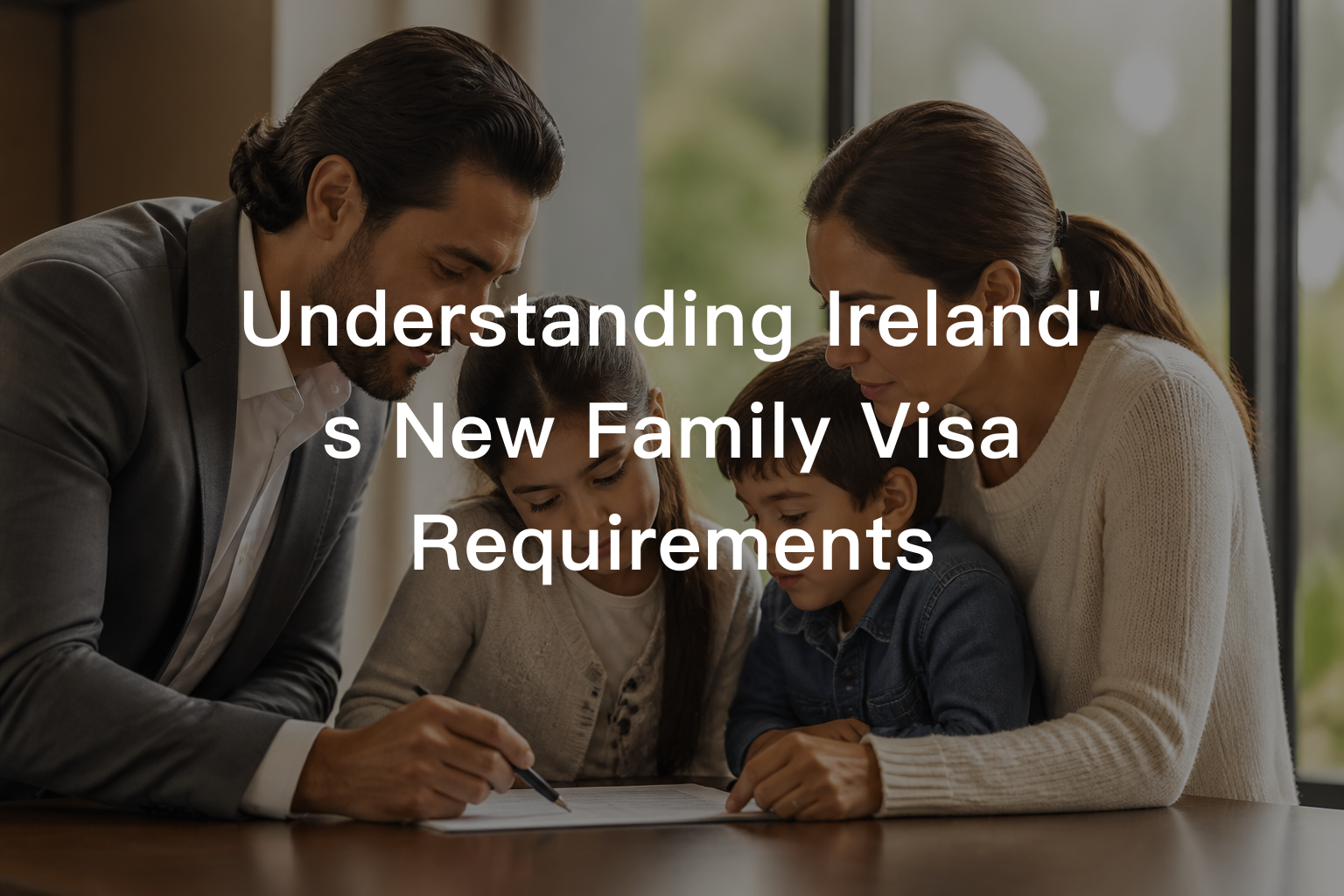
Explore updated family visa categories in Ireland, focusing on eligibility and the application process for international families.
Navigating Ireland’s Updated Family Visa Categories
Ireland has recently revised its family visa requirements, a change that carries significant implications for international families. These modifications aim to streamline the process while accommodating diverse family structures. For Chinese families considering a move to Ireland, understanding these updates is crucial for a smooth transition. The new categories are designed to more clearly define eligibility and align with Ireland's broader immigration policies.
The primary categories include the Join Family Visa for dependents and the Family Reunification Visa for those reuniting with Irish citizens or residents. Specific Stamps, such as Stamp 4 for spouses and Stamp 3 for dependents, delineate the rights and permissions granted. It is essential to grasp these distinctions to ensure compliance and avoid legal pitfalls.
The Irish Naturalisation and Immigration Service (INIS) provides comprehensive guidelines on these categories. However, the process can still be intricate, particularly for families unfamiliar with the Irish system. By partnering with experienced consultants, like those at Peterson Family Office, families can navigate these complexities more effectively.
Eligibility Criteria: Who Can Apply?
Determining eligibility is the first step in the application process for Ireland’s family visas. The primary applicants are typically Irish citizens or residents wishing to bring non-EEA family members to Ireland. Dependents such as spouses, civil partners, and children under 18 are generally eligible under the Join Family Visa.
For instance, a Chinese family where one parent is employed in Ireland on a Critical Skills Employment Permit can apply for their spouse and children to join them. The key requirement here is that the primary applicant must demonstrate sufficient income to support the family, ensuring they will not become a financial burden on the state.
Moreover, the residency status of the principal applicant in Ireland can affect eligibility. Holding a Stamp 4 entitles the holder to sponsor family members, whereas those on a Stamp 1 may face more restrictions. Consulting with immigration experts can provide clarity on specific scenarios, helping families to determine the most appropriate visa category.
The Application Process: Step-by-Step Guidance
The application process for family visas in Ireland requires meticulous planning and thorough documentation. Applicants must submit a completed application form to the INIS, along with supporting documents like proof of relationship, financial statements, and the primary applicant’s legal status in Ireland. Each step must be carefully executed to prevent delays or rejections.
- Start by gathering necessary documents, such as marriage certificates or birth certificates, translated into English if needed.
- Prepare financial evidence demonstrating the primary applicant’s ability to support the family.
- Submit the application well in advance of your planned travel to account for processing times, which can vary depending on the specific visa category.
For families, particularly those new to the Irish system, engaging a consultant can be invaluable. They can offer insights into common pitfalls and provide strategic advice tailored to individual family circumstances. Being proactive and detail-oriented mitigates the risk of complications during this critical phase.
Benefits of Securing a Family Visa
Securing a family visa in Ireland opens up numerous opportunities and benefits. Once granted, family members can enjoy rights similar to those of the primary visa holder, including access to education and healthcare. Children can attend some of the country’s top schools, such as St. Andrew’s College in Dublin or the prestigious Blackrock College, enhancing their educational prospects significantly.
Furthermore, family members who obtain residency under a family visa may eventually qualify for long-term residency or citizenship. This pathway provides stability and security for the entire family, fostering a sense of belonging in a new country.
For the spouse accompanying a primary visa holder, such as someone on a Critical Skills Employment Permit, the family visa can also mean access to the Irish job market, creating economic opportunities and enabling a more integrated life in Ireland. These benefits underscore the importance of understanding and adhering to the visa requirements to fully leverage the opportunities available.
The Role of Education in Family Visa Applications
Education is often a pivotal factor for families considering a move to Ireland. The country boasts a well-regarded education system, with institutions like Trinity College Dublin and University College Dublin offering world-class programmes. For families moving with children, access to quality education is a primary concern, and Ireland’s family visa categories support this by allowing school-aged children to enrol in public and private schools.
While primary and secondary education is typically free in public schools, private institutions may charge fees ranging from €5,000 to €20,000 annually. Understanding these costs and planning accordingly is essential for families budgeting their move.
The educational prospects for children on family visas are bright, with Ireland’s focus on holistic development and multiculturalism. This educational environment can be especially beneficial for Chinese families keen on integrating their children into a global community while maintaining their cultural heritage.
Financial Planning for Newly Arrived Families
Financial planning is crucial for families arriving in Ireland, especially when navigating the costs associated with relocation and settling in. After securing a family visa, opening a local bank account becomes a priority. Understanding the banking landscape, whether through traditional banks like AIB and Bank of Ireland or digital options such as Revolut, can streamline financial management.
Additionally, securing a PPS Number is imperative as it’s tied to all financial and state interactions, including employment and healthcare. Without it, families risk being taxed at emergency rates and missing out on essential services.
Advisory services can assist families in organising their finances, providing guidance on budgeting for everyday expenses, and long-term financial commitments like education and property investment. Sound financial planning enhances the family's ability to settle comfortably and thrive in their new environment.
Leveraging Professional Guidance for a Seamless Transition
While the prospects of relocating to Ireland are undoubtedly exciting, the transition can pose numerous challenges. Engaging professional consultants can make a significant difference by offering tailored advice and support throughout the process. From interpreting complex visa requirements to facilitating smooth interactions with Irish bureaucracies, their expertise is invaluable.
At Peterson Family Office, our team has extensive experience assisting Chinese families, among others, in successfully navigating Ireland's immigration landscape. We offer personalised strategies that address each family’s unique needs, ensuring a seamless transition that prioritises both legal compliance and family well-being.
Ultimately, leveraging professional guidance not only simplifies the logistical aspects of the move but also provides peace of mind, allowing families to focus on integrating into Irish society and making the most of the opportunities available.
About Peterson Family Office
Peterson Family Office Limited was established in Dublin in 2022, serving high-net-worth international families with a focus on education pathway planning, tax advisory, and long-term family strategy. Our philosophy — Professional · Disciplined · Long-term Commitment — guides every aspect of our work. We combine deep knowledge of the Irish and European landscape with a genuine understanding of the needs of families relocating from Asia and beyond.
Our three core service areas — Education Pathway Planning, the 1+1 Dual Mentorship System, and Family Office Services — work together to support families at every stage of their journey in Ireland. To learn more about how we can help your family, visit About Peterson Family Office.
Related Articles
Seasonal Wellness Tips for Families in Ireland
Discover essential wellness tips for families in Ireland to stay healthy and happy throughout the year.
Family Cultural Exchange Opportunities in Ireland
Explore family-oriented cultural exchange opportunities in Ireland for better integration and understanding.
Integrating Chinese Families into Irish Communities: Practical Tips
Discover practical tips for Chinese families to seamlessly integrate into Irish communities using local resources and cultural events.