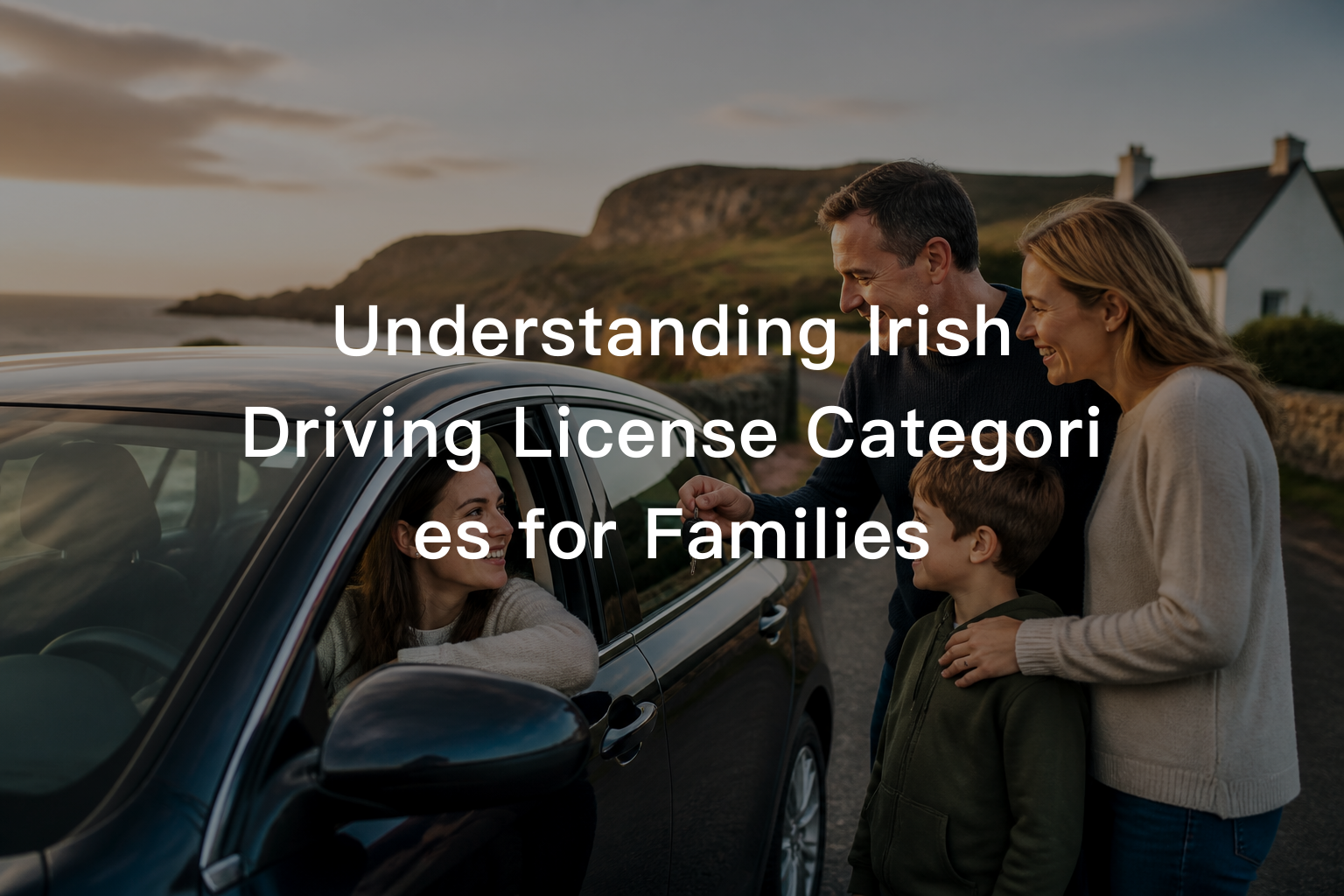
Navigate Irish driving licenses with ease, understand categories for your family's needs.
Introduction to Irish Driving Licenses
For families moving to Ireland, understanding the complexities of the Irish driving license system can be daunting. The abundance of categories and regulations can make it difficult to figure out which licenses you need and how to obtain them. The Irish driving license system is designed to ensure that drivers are qualified to operate specific types of vehicles, which in turn enhances road safety for everyone.
The Irish driving license is divided into several categories, each corresponding to a different type of vehicle. This categorisation ensures that drivers have the appropriate skills and knowledge to handle the vehicle they intend to drive. For instance, Category B covers standard cars, while Category A is for motorcycles. Understanding these categories is crucial for families, especially if you plan on driving different vehicles or have teenagers ready to learn how to drive.
In this comprehensive guide, we'll explore the various driving license categories in Ireland, what they mean for your family, and how to navigate the application process. With the right knowledge, you can ensure that your family members are on the road legally and safely.
Basic License Categories: A, B, and Beyond
The most commonly sought-after driving licenses in Ireland are Category B, which allows you to drive cars, and Category A, which is for motorcycles. For most families, a Category B license will be the starting point as it covers vehicles with a maximum weight of up to 3,500 kg and up to eight passenger seats in addition to the driver's seat. This category is essential for everyday family transportation needs.
Category A, on the other hand, is for motorcycles and is less commonly needed by families unless someone has a specific requirement or interest in motorcycling. Within Category A, there are subcategories such as A1 for smaller motorcycles and mopeds, which may be suitable for older teenagers eager to gain some independence.
Beyond these, there are other categories like Category C for larger vehicles and Category D for buses. Each category has its own set of requirements and eligibility criteria, such as age restrictions and specific tests. Understanding which category your family members need will save time and ensure compliance with Irish law.
Advanced Categories: C and D
For families considering larger vehicles or public transport options, it's essential to understand the advanced driving license categories. Category C licenses cover large goods vehicles, which can be particularly useful if you're involved in moving or transporting goods as part of a business. This category requires the driver to be at least 18 years old and to pass additional tests beyond the standard car driving test.
Category D licenses are necessary for those intending to drive buses or larger passenger vehicles. This category can be relevant for family members involved in community transport initiatives or larger family outings. The minimum age for this category is generally 21, and like Category C, it involves specific tests and training programs to ensure driver competency.
For families with business interests that require heavy or passenger vehicle transportation, obtaining the right license category is essential. Understanding the requirements and ensuring compliance will not only keep your family within legal boundaries but also promote safety on the roads.
The Application Process for Families
Applying for an Irish driving license involves several steps that families should be aware of. Initially, all applicants must pass a driver theory test, which assesses knowledge of road rules and safe driving practices. This is a prerequisite for obtaining a learner permit, necessary for practical driving experience.
The actual driving test is the next hurdle, where practical driving skills are assessed. Preparing for this can be a family affair, with parents guiding young drivers through practice sessions. It’s worth noting that practice under the supervision of a qualified instructor is often the most effective way to ensure success in the driving test.
- Pass the Driver Theory Test
- Obtain a Learner Permit
- Complete Driving Lessons
- Pass the Practical Driving Test
Understanding these steps can help streamline the application process and reduce stress for families, helping each member get on the road as quickly and safely as possible.
Preparing Young Drivers in the Family
For families with teenagers coming of age, guiding them through the process of obtaining a driving license can be both an exciting and daunting task. In Ireland, learners can apply for a Category B learner permit at the age of 17. However, obtaining a license is more than just passing tests; it involves instilling a sense of responsibility and awareness of road safety.
Enrolling young drivers in recognised driving schools can provide them with structured learning and professional guidance. Institutions like the Irish School of Motoring offer comprehensive programmes tailored to young drivers. These courses are designed to build confidence and competence behind the wheel.
Many families find it beneficial to combine professional lessons with supervised practice at home. Setting aside time each week for driving practice can greatly improve a learner's skills and readiness for the driving test. By investing time and resources into thorough preparation, families can help ensure their young drivers are well-equipped for a lifetime of safe driving.
Real Scenarios: What Families Need to Know
Consider the scenario of the Chen family, who recently relocated from China to Dublin. With two teenagers nearing driving age, they needed to understand the process of obtaining a driving license in Ireland. By prioritising the driver theory test and learner permit, they ensured their children could start gaining driving experience sooner rather than later. Enrolling them at the Dublin Driving School, they were able to access tailored learning programmes that fit their schedule.
Then there’s the Patel family, who run a family-owned delivery business in Cork. Recognising the need for a Category C license for their operations, they systematically planned for the necessary training and testing. By understanding the requirements and preparing accordingly, they easily transitioned their business to the new environment without legal hiccups.
These examples highlight the importance of planning and understanding the driving license system. By tailoring their approach to their specific needs, families can navigate the licensing landscape effectively, ensuring all members are legally and safely on the road.
Conclusion: Navigating the Licensing Landscape
The process of acquiring an Irish driving license is multi-faceted and varies depending on the vehicle category and the family's needs. From basic car licenses to advanced vehicle categories, understanding the different options available is crucial for international families settling in Ireland.
With the right preparation and resources, your family can seamlessly integrate into the Irish road system. Engaging with local driving schools, preparing for theory and practical tests, and understanding specific license requirements will make the transition smoother.
Ultimately, the key to successfully navigating the Irish driving license landscape lies in understanding your family's needs, planning accordingly, and taking proactive steps to ensure compliance with Irish regulations. With these measures, you can enjoy peace of mind and contribute to a safer driving environment for everyone.
About Peterson Family Office
Peterson Family Office Limited was established in Dublin in 2022, serving high-net-worth international families with a focus on education pathway planning, tax advisory, and long-term family strategy. Our philosophy — Professional · Disciplined · Long-term Commitment — guides every aspect of our work. We combine deep knowledge of the Irish and European landscape with a genuine understanding of the needs of families relocating from Asia and beyond.
Our three core service areas — Education Pathway Planning, the 1+1 Dual Mentorship System, and Family Office Services — work together to support families at every stage of their journey in Ireland. To learn more about how we can help your family, visit About Peterson Family Office.
Related Articles
Best Dublin Neighbourhoods for Families Relocating
Discover the top Dublin neighbourhoods for international families, focusing on amenities, schools, and green spaces.

Family-Friendly Dublin Neighbourhoods for Chinese Families
Explore Dublin's best neighbourhoods for Chinese families, featuring schools, cultural hubs, and family services.
Family Housing Options in Dublin Neighbourhoods
Explore spacious family housing in Dublin neighbourhoods with top schools. Ideal homes with practical advice and insider insights.