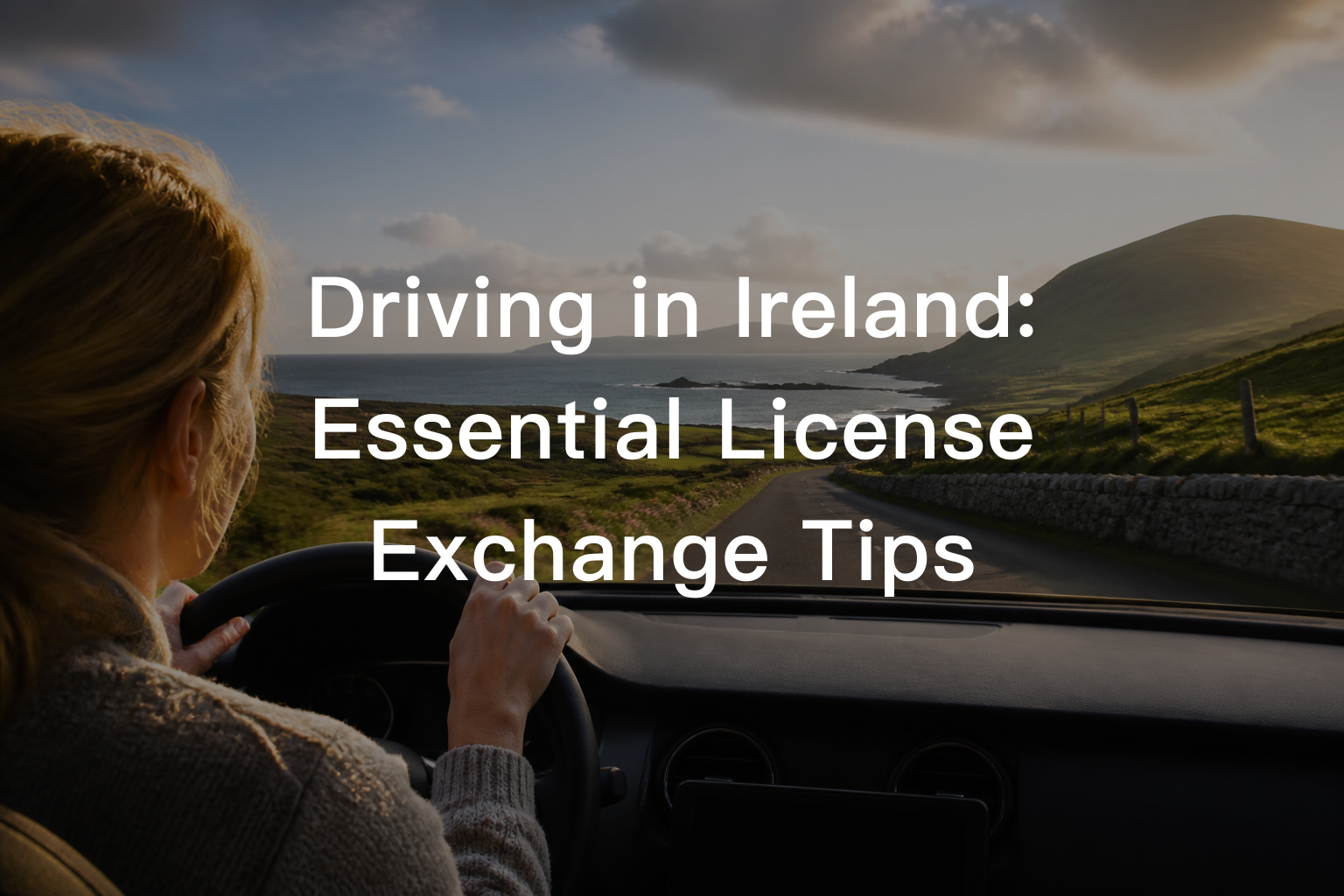
Navigate the driving license exchange process in Ireland with ease. Tips for international families ensuring compliance and smooth transition.
Understanding the Irish Driving License System
For international families moving to Ireland, understanding the driving license system is a crucial step in ensuring mobility and independence. Ireland operates a structured system governed by the National Driver Licence Service (NDLS). The system is designed to assess the competence of drivers and ensure road safety. A full Irish driving license is required to drive without restrictions, and it is divided into different categories depending on the type of vehicle one wishes to operate.
Foreign nationals can drive on their existing licenses for up to 12 months, but for long-term residents, exchanging for an Irish license is advisable. This not only complies with Irish law but also ensures that you’re covered in case of an accident, as some insurance policies may not fully recognise foreign licenses. It is important to note that Ireland has reciprocal arrangements with several countries that allow for straightforward license exchanges.
- Countries with exchange agreements include Australia, South Africa, and a number of EU countries.
- The exchange process involves surrendering your existing license, presenting personal identification, and possibly taking an eye test.
The License Exchange Process: Step-by-Step
The process of exchanging your foreign driving license for an Irish one involves several key steps. First, you need to check if your current license is eligible for exchange. If your country is part of a reciprocal agreement, the process is relatively straightforward. You will need to schedule an appointment with the NDLS, which can be done online through their official website.
On the day of your appointment, bring your current driving license, proof of identity such as a passport, proof of address like a utility bill, and your PPS Number. The NDLS also requires a fee, which is currently €55 for most licenses. If your license is not in English, an official translation might be necessary.
After submitting your application, your Irish driving license will typically arrive by post within two weeks. It’s important to note that the original foreign license will be retained by the NDLS, so ensure you have any necessary copies before proceeding.
Navigating Challenges: Common Pitfalls and Solutions
While the process of exchanging a driving license in Ireland is generally straightforward, some families encounter challenges. A common issue is the misunderstanding of eligibility requirements; not all licenses can be exchanged directly. Families from countries without reciprocal agreements must consider a different approach, often starting with a learner permit.
Another challenge is the verification of documents. The NDLS is strict about proof of identity and residency, so ensure all documents are current and legitimate. Utility bills should be recent, and identification documents must be valid.
- If you find yourself without a reciprocal agreement, you will need to undergo the full Irish driving test.
- Check the NDLS website or contact Peterson Family Office for tailored advice on your specific situation.
Considering Insurance and Legal Compliance
Insurance is a critical component of driving in Ireland. Without a valid insurance policy, you cannot legally operate a vehicle. Many insurance providers require an Irish driving license, so completing the exchange is not just a matter of convenience, but necessity. Comprehensive coverage is recommended, especially for families, to ensure peace of mind in case of accidents.
The cost of insurance varies significantly depending on factors such as the driver’s age, driving history, and the type of vehicle. For instance, insuring a family car like the Toyota Corolla could range from €500 to over €1,200 annually. It’s advisable to compare quotes from multiple insurers to find the best deal.
Remember, driving without insurance can result in severe penalties, including fines and potential disqualification from driving. Thus, ensuring compliance with both licensing and insurance regulations is crucial for a smooth transition to life in Ireland.
Case Study: A Family's Journey to Licensing in Ireland
Consider the Zhang family, who moved to Dublin from Beijing. Upon arrival, Mr. Zhang faced the task of exchanging his Chinese driving license. Initially unaware of Ireland's specific requirements, he mistakenly assumed his license was directly exchangeable. After consulting with Peterson Family Office, he realised that China does not have a reciprocal agreement with Ireland.
Mr. Zhang then embarked on the process of obtaining a learner permit, followed by the necessary theory test. With guidance, he navigated the procedure efficiently, ultimately obtaining a full Irish driving license within a year. Meanwhile, Mrs. Zhang, holding an Australian license, benefited from a direct exchange due to the reciprocal agreement.
This experience underscores the importance of understanding the specifics of your situation and seeking expert advice when needed. Institutions like the NDLS provide resources, but personalised guidance can smooth the path considerably.
The Role of the PPS Number in Driving License Exchange
Your PPS Number is more than just a tax identifier in Ireland; it plays a pivotal role in the driving license exchange process too. This number is required when applying for your Irish license, serving as a proof of residency and linking you to the Irish state’s services.
For families new to Ireland, obtaining a PPS Number should be a top priority within your first 30 days. Without it, you may face delays in accessing essential services, including the driving license exchange. The application process involves proving your need for a PPS Number, often through employment or residency documentation.
- The PPS Number is essential for the theory test and driving test applications.
- Ensure all family members who will be driving have their PPS Numbers ready well in advance.
Getting Professional Help: When to Consult Experts
While many families manage the driving license exchange process on their own, there are situations where professional advice can be invaluable. Peterson Family Office, for example, offers tailored assistance in navigating Irish administrative processes, including license exchanges and other relocation matters.
Consulting experts can be particularly beneficial for families from non-reciprocal countries or those facing complex documentation issues. They can provide insights into less apparent requirements and help avoid costly mistakes, such as missed deadlines or incorrect applications.
Ultimately, the decision to seek professional help depends on your comfort level with bureaucratic processes and your specific circumstances. But for peace of mind and efficiency, expert guidance is often worth the investment.
About Peterson Family Office
Peterson Family Office Limited was established in Dublin in 2022, serving high-net-worth international families with a focus on education pathway planning, tax advisory, and long-term family strategy. Our philosophy — Professional · Disciplined · Long-term Commitment — guides every aspect of our work. We combine deep knowledge of the Irish and European landscape with a genuine understanding of the needs of families relocating from Asia and beyond.
Our three core service areas — Education Pathway Planning, the 1+1 Dual Mentorship System, and Family Office Services — work together to support families at every stage of their journey in Ireland. To learn more about how we can help your family, visit About Peterson Family Office.
Related Articles
Understanding Irish Driving License Categories for Families
Navigate Irish driving licenses with ease, understand categories for your family's needs.
Best Dublin Neighbourhoods for Families Relocating
Discover the top Dublin neighbourhoods for international families, focusing on amenities, schools, and green spaces.
Family-Friendly Dublin Neighbourhoods for Chinese Families
Explore Dublin's best neighbourhoods for Chinese families, featuring schools, cultural hubs, and family services.