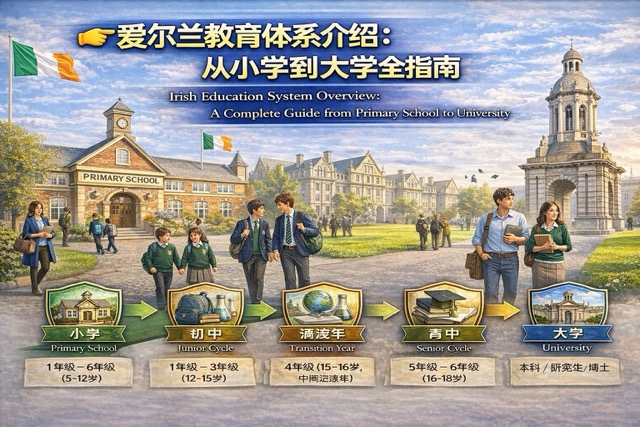
A comprehensive analysis of the Irish education system, covering primary school, secondary school, and university applications and curriculum structure, including advantages of studying abroad, examination systems, pathways to further education, and practical advice, providing a useful guide for students and families planning to study in Ireland.
Introduction to the Irish Education System: A Comprehensive Guide from Primary School to University
I. Overview of the Irish Education System
Ireland is one of the representatives of high-quality education systems in Europe, with a clear structure that emphasizes the overall development of students. Education is divided into preschool education, primary education, secondary education, vocational education, and higher education.
In Ireland, primary education is compulsory, while higher education is highly recognized globally, with many universities performing excellently in world university rankings.
II. Irish Primary Education Stage (Ages 6–18)
1. Preschool Education (Preschool / Early Years)
For children aged 3–5
Emphasizes play-based learning and social skills development
Options include kindergartens, nurseries, etc.
2. Primary Education (Primary School: Ages 6–12)
Enrollment Age and School System
Irish primary schools typically start at age 6, covering a total of 8 grades (1–8).
Main Learning Content
Reading, writing, mathematics
Science, social studies, arts
Physical education, music, and language courses
Academic Assessment
There are no national standardized exams at the primary level, but schools track student progress through classroom assessments to aid the transition to secondary education.
III. Irish Secondary Education (Ages 12–18)
Secondary education is divided into two stages:
1. Junior Cycle Stage (Ages 12–15)
After completing a 3-year curriculum, students must take the Junior Certificate exam, which is the foundation for entering advanced courses.
Main Subjects include:
English, mathematics, science
Social studies, foreign languages, arts, and physical education
2. Senior Cycle Stage (Ages 15–18)
Divided into two main pathways:
(1) Leaving Certificate (Traditional Secondary School Program)
Duration of 2 years (typically ages 16–18)
Courses are deeper and more academic
(2) Leaving Certificate Applied (LCA Applied Program)
Focuses on practical skills
Suitable for skill-oriented, vocationally focused students
After graduation, students take the national standardized Leaving Certificate exam, and the results are a key indicator for university admissions.
IV. Irish Higher Education
1. Classification of Universities and Colleges
Irish higher education is mainly divided into:
Universities
Technological Universities / Institutes of Technology
Colleges and Private Educational Institutions
2. Degree Structure
According to the European education system (EQF standards):
Degree | Duration | Degree Type |
|---|---|---|
Bachelor | 3–4 years | Undergraduate |
Master | 1–2 years | Postgraduate |
Doctorate | 3–4 years | Doctoral |
3. International Student Application Process
Irish universities accept applications from students worldwide, main steps:
(1) Online Application Submission
Through the university's official website or a centralized application platform (such as CAO).
(2) Submit Transcripts and Language Scores
IELTS generally requires 6.5 or above
Some programs may require higher language standards
(3) Portfolio / Interview (if required)
Some programs in arts, design, etc., require submission of a portfolio or an interview assessment.
5. Advantages of the Irish Education System
1. Globally Recognized Qualifications
Irish qualifications are recognized in Europe and globally, facilitating further education and employment.
2. High-Quality Education with Practical Integration
Course arrangements combine theory and practice, encouraging innovation and critical thinking.
3. Comprehensive Support for International Students
Many institutions have international offices, learning support centers, and career development services.
6. Costs of Education and Living in Ireland
1. Tuition Fee Reference
Undergraduate: €10,000–€25,000/year (depending on university and program)
Master's: €12,000–€30,000/year
2. Living Expenses
The cost of living in Ireland is relatively high, especially in Dublin:
Approximately €10,000–€14,000/year (excluding tuition fees)
7. Frequently Asked Questions about the Irish Education System FAQ
Q1: Is education in Ireland compulsory?
Yes, primary and secondary education is compulsory.
Q2: How important is the Leaving Certificate exam?
Very important, it is a core basis for university admission.
Q3: Can international students work?
Student visas allow part-time work during the course and holiday work, which helps alleviate living costs.
VIII. Summary: Why choose education in Ireland?
The Irish education system is rigorous, internationally recognized, and has comprehensive support for international students, making it an important choice for students worldwide, especially Chinese students, to study abroad.
Tags
Related Articles
Affordable Childcare Options for Working Parents in Dublin
Explore top affordable childcare options in Dublin for working parents, including quality preschools and after-school programs.

Childcare Facilities for Global Families in Dublin
Explore tailored childcare options in Dublin for international families, ensuring a smooth cultural transition.
Ireland University Admission Success Stories: Real Student Journeys
Discover real Ireland university admission success stories with students gaining entry to top institutions like Imperial and Oxford through strategic planning.