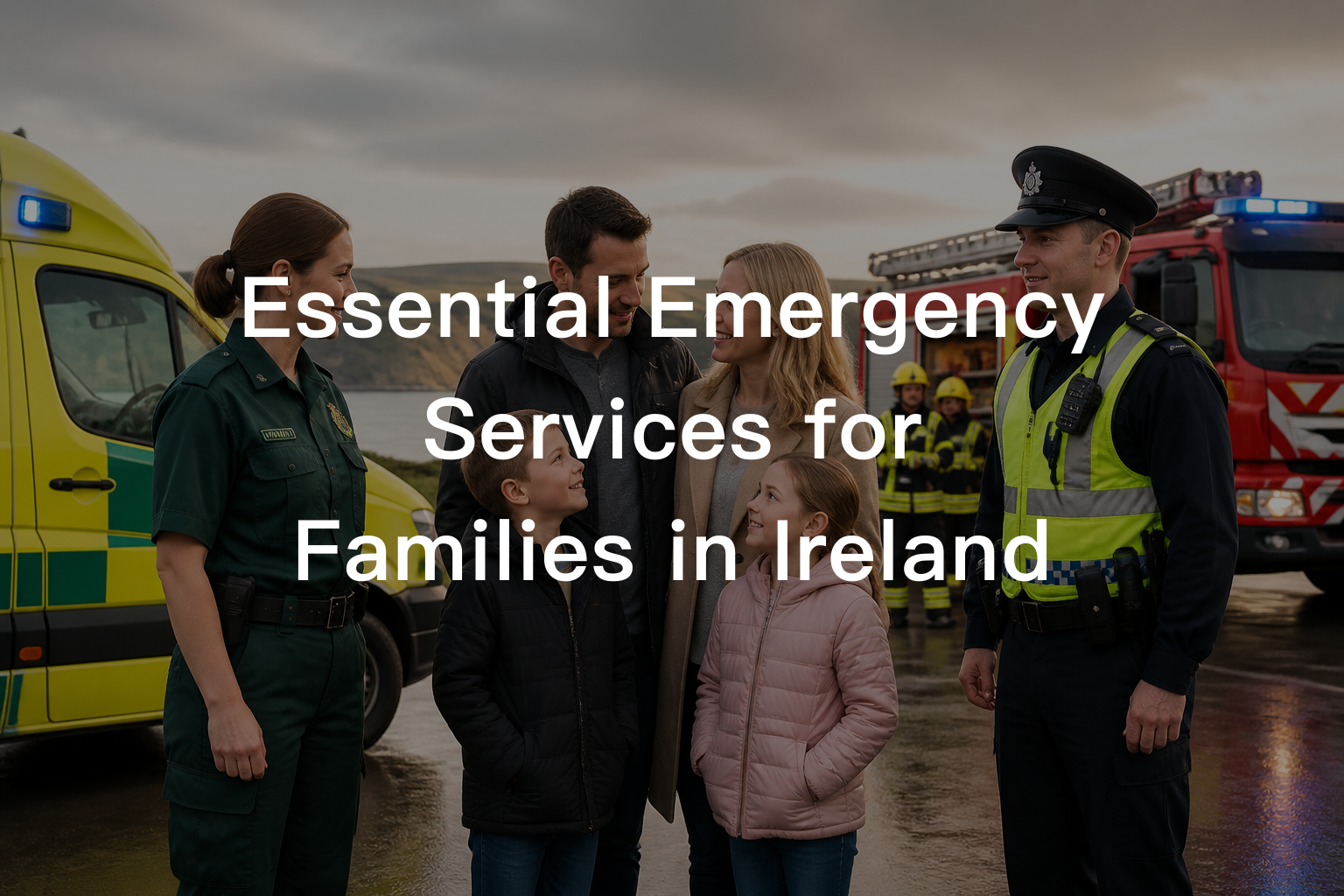
Navigate Ireland's emergency services: healthcare, fire, and police. Essential for families settling in Ireland.
Understanding Ireland's Emergency Healthcare Services
When your family moves to Ireland, understanding the healthcare system is a priority. Ireland offers a mix of public and private healthcare services, and knowing how to access these is crucial in an emergency. The Health Service Executive (HSE) is responsible for public healthcare, providing services through hospitals like St. Vincent's University Hospital in Dublin and University Hospital Galway.
For urgent healthcare needs, the Accident & Emergency (A&E) departments at these hospitals operate around the clock. However, finding the right facility can be challenging if you're unfamiliar with the area. It's advisable to have a list of nearby hospitals and their contact numbers, especially if you have young children or elderly family members.
Private healthcare is also an option in Ireland, with providers like Vhi Healthcare and Irish Life Health offering various plans. While it comes at a cost, private healthcare can ensure quicker access to services, a critical factor in emergencies. Consider your family's specific needs when choosing a plan, and remember, having a PPS Number is essential for any healthcare service access.
Navigating Police Services for a Safe Family Environment
The Garda Síochána, Ireland's national police service, plays a vital role in maintaining safety and security. Families can rely on local Garda stations for assistance in emergencies. With 564 stations across the country, such as the busy Pearse Street Garda Station in Dublin, you can find help nearby in times of need. The emergency number, 112 or 999, connects you to the police, fire, or ambulance services.
Understanding how the Gardaí operate can bring peace of mind to families. Community policing is a core element, with officers engaging with local communities to enhance safety. For families, this means more proactive measures in preventing crime and addressing local concerns.
It's also essential to be aware of the supports available for victims of crime, including services offered by organisations like Victim Support at Court. These provide guidance through legal proceedings, ensuring you and your family feel supported during challenging times.
Fire Services: Prevention and Response
Fire safety is a crucial aspect of family life, and understanding Ireland's fire services can help you prepare for any emergencies. The Dublin Fire Brigade, one of the largest in Ireland, offers both fire and emergency medical response. They operate out of several stations, with Tara Street Fire Station being one of the busiest.
Families should be familiar with fire safety protocols, including having functional smoke alarms and understanding evacuation procedures. Schools and local councils often run fire safety programmes, such as the Fire Safety Week initiatives, which are excellent resources for educating children on safety measures.
- Install and regularly check smoke alarms in your home.
- Have a clear family evacuation plan.
- Attend local fire safety workshops if available.
Consider enrolling in a basic first aid course, often offered by organisations like the Irish Red Cross, to equip yourself with skills that could be invaluable in an emergency.
Emergency Numbers and What to Expect
In Ireland, the numbers 112 and 999 are critical to know. They connect you to emergency services, including ambulance, fire, and police assistance. However, it's not just about knowing the numbers—it’s understanding what happens when you call them.
When you dial 112 or 999, operators quickly ascertain the nature of the emergency and dispatch the appropriate services. Being clear and concise with information can significantly aid responders in providing timely assistance. Practising these calls with children, in a non-emergency way, can be beneficial.
- Teach children how to call 112 or 999.
- Ensure they know their home address and phone number.
- Explain scenarios when they should call these numbers.
Knowing what to expect can alleviate panic and ensure your family responds appropriately in a crisis. Regular discussions about how to handle emergencies can make all the difference.
School Emergency Protocols: Ensuring Child Safety
Schools in Ireland, like Blackrock College in Dublin or the more rural Clongowes Wood College, have robust emergency protocols to ensure student safety. Understanding these protocols can reassure families about their children's welfare during the school day.
Most schools conduct regular fire drills and have clear procedures for various emergencies, from medical incidents to severe weather events. As a parent, engaging with the school to understand these procedures is wise. Meet with teachers or administrators during open days or parent evenings to discuss any concerns you might have.
Furthermore, schools often have contact lists for emergencies, and it’s crucial that your contact details are up to date. This ensures you are immediately reachable should an incident occur. Proactively engaging with the school community can help you better navigate these protocols.
Practical Steps for Emergency Preparedness
Preparing your family for emergencies involves more than just understanding services; it requires practical steps too. Keeping an emergency kit at home with essentials like flashlights, batteries, a first aid kit, and bottled water can be lifesaving.
Consider attending community preparedness workshops, often organised by local councils or community centres. These sessions offer practical advice and often include discussions on tailoring emergency plans to suit diverse family needs, including those with disabilities or chronic conditions.
- Maintain a list of vital contacts, including nearby hospitals and local Garda stations.
- Regularly update your emergency kit.
- Familiarise yourself with community resources.
These steps, although seemingly simple, can significantly contribute to your family’s safety and peace of mind.
Community Support and Resources
Beyond official services, community support can be invaluable during emergencies. Local councils and community organisations frequently run programmes aimed at building resilience and offering support in crises.
For example, many areas have community alert schemes facilitated by the Gardaí, which encourage neighbours to look out for one another. In larger towns and cities, organisations like the Citizens Information Board provide guidance on accessing various services, from healthcare to housing.
Engaging with these community resources not only offers practical support but also builds a network of relationships that can be crucial in times of need. For Chinese families, seeking out local Chinese community groups can provide culturally specific support and advice, easing the transition into Irish life.
About Peterson Family Office
Peterson Family Office Limited was established in Dublin in 2022, serving high-net-worth international families with a focus on education pathway planning, tax advisory, and long-term family strategy. Our philosophy — Professional · Disciplined · Long-term Commitment — guides every aspect of our work. We combine deep knowledge of the Irish and European landscape with a genuine understanding of the needs of families relocating from Asia and beyond.
Our three core service areas — Education Pathway Planning, the 1+1 Dual Mentorship System, and Family Office Services — work together to support families at every stage of their journey in Ireland. To learn more about how we can help your family, visit About Peterson Family Office.
Related Articles

Navigating Dublin's Best Family Neighbourhoods
Discover the top Dublin neighbourhoods for international families, complete with schools, amenities, and lifestyle tips.
Ireland Monthly Weather Breakdown for Relocating Families
Prepare for Ireland's monthly weather changes. Detailed guide for relocating families with real-world examples.
Seasonal Activities for Families in Ireland
Discover diverse seasonal activities in Ireland for families, enhancing your relocation experience with cultural and recreational events.