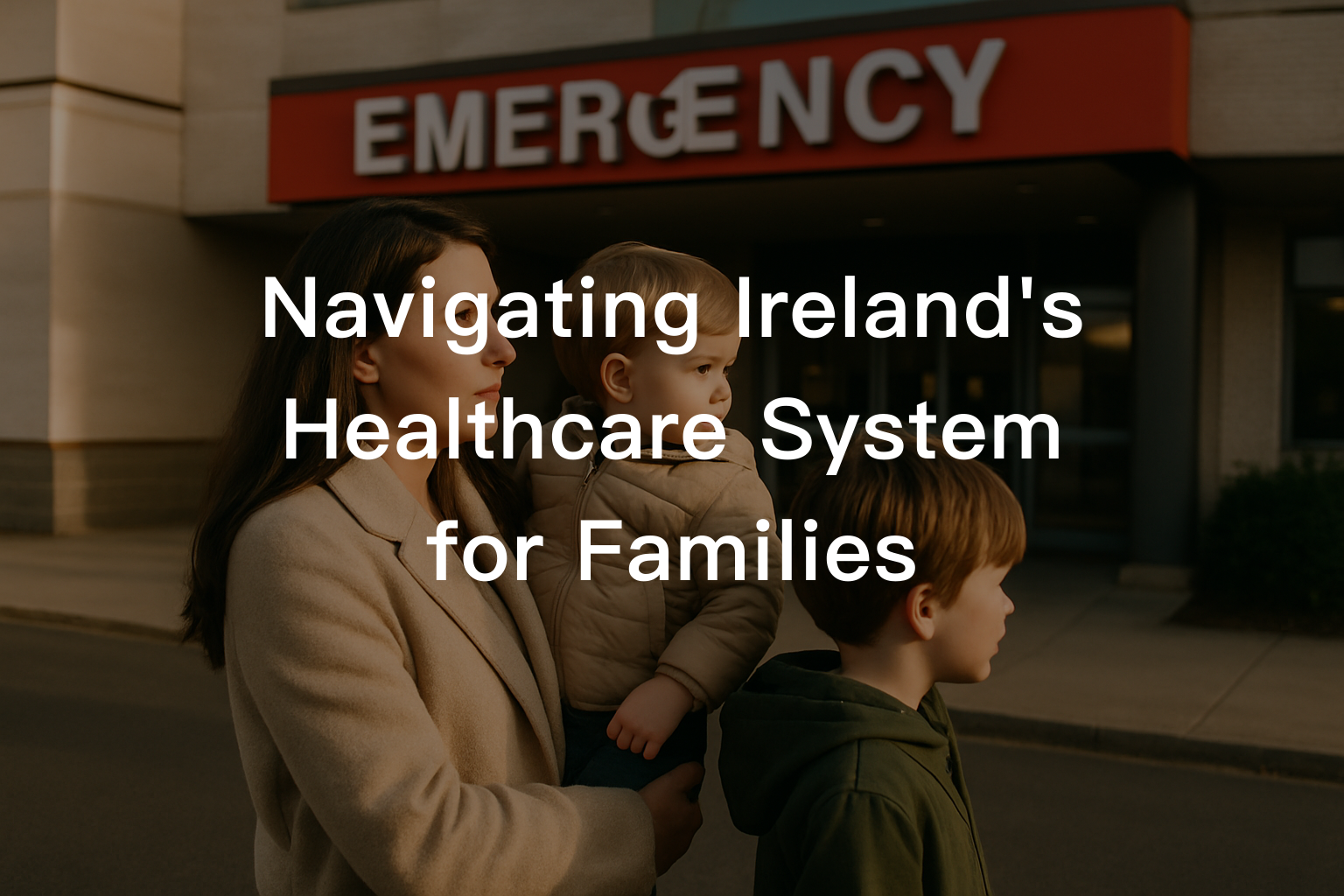
Understand how Ireland's healthcare system functions for families and manage emergencies effectively.
Understanding Ireland's Healthcare Framework
Ireland offers a dual healthcare system, comprising public and private services. The Health Service Executive (HSE) manages the public system, funded through taxation, ensuring that most services are either free or subsidised. While public healthcare is accessible to all, it can sometimes result in long waiting periods, especially for non-urgent care.
For families relocating to Ireland, it is crucial to understand the eligibility requirements and processes for accessing public healthcare. As residents, families can apply for a Medical Card, which offers free GP visits, hospital services, and prescriptions for children under six. For those not eligible for a Medical Card, the GP Visit Card offers a limited range of free services.
Private healthcare, on the other hand, offers more flexibility and shorter waiting times. Institutions like the Mater Private Hospital and Blackrock Clinic in Dublin provide premium services but come at a higher cost. Families often opt for private health insurance from providers like VHI, Laya Healthcare, or Irish Life Health to offset these expenses.
The Role of the PPS Number in Healthcare
A crucial step for any family moving to Ireland is obtaining a Personal Public Service (PPS) Number. This number is essential not just for taxation and social services but also as your ticket to healthcare access. Without it, you will face obstacles in registering with a GP or applying for a Medical Card.
The PPS Number serves as a unique identifier in the public health system. It enables families to access Child Benefit, which can aid in offsetting healthcare costs. Additionally, it is required when applying for services like the GP Visit Card or registering for public health services.
Delays in obtaining a PPS Number can lead to unnecessary emergency tax deductions and restrictions in accessing healthcare facilities. Therefore, securing a PPS Number should be a top priority upon arrival in Ireland.
Emergency Services: What Families Need to Know
In the event of an emergency, understanding how to efficiently navigate Ireland's emergency healthcare services is vital. Dial 112 or 999 for immediate assistance, which connects you to ambulance, police, or fire services. It's important to note that while ambulance services are free in emergencies, non-emergency calls may incur charges.
The Accident & Emergency (A&E) departments in public hospitals like St. James's Hospital and Beaumont Hospital in Dublin are equipped to handle critical situations. However, be prepared for possible waiting times due to demand. Always bring your PPS Number and any relevant medical information when visiting.
- Identify your nearest A&E department
- Keep a list of emergency contacts readily available
- Consider private A&E options for faster service
Routine Healthcare: GP and Specialist Access
Choosing the right General Practitioner (GP) is a critical decision for families. GPs are the first point of contact for health issues and can refer patients to specialists if needed. It's advisable to register with a GP soon after arrival to ensure timely access to healthcare. GP fees can range from €40 to €60 per visit without a Medical Card.
For specialist appointments, the public system can have long wait times. Opting for private consultations can expedite the process, though at a cost. In Dublin, for instance, facilities such as Beacon Hospital offer specialised care with typically shorter wait times.
Families should discuss with their GP about accessing necessary vaccinations, especially for children. Schools often require up-to-date immunisation records, and public health nurses can provide school-based vaccination programmes.
Health Insurance: Navigating Options and Costs
While Ireland's public healthcare system provides a safety net, many families choose to supplement it with private health insurance. This not only reduces waiting times for certain services but also offers a broader choice of specialists and facilities.
Providers like VHI, Laya Healthcare, and Irish Life Health offer a range of policies tailored to different family needs and budgets. Policies can vary significantly in cost and coverage, often ranging from €1,000 to €2,500 annually for a family plan. Considerations should include hospital coverage, outpatient services, and maternity care if applicable.
- Compare plans using resources like the Health Insurance Authority website
- Read the fine print of policies for exclusions
- Balance premium costs with coverage needs
Child Healthcare: Essential Information for Families
In Ireland, healthcare for children under six is largely subsidised, with free GP visits and access to a range of health services. Families should ensure they apply for the GP Visit Card, which covers these services. Dental and vision care, while not free, are covered under the Treatment Benefit Scheme for eligible children.
Routine vaccinations are provided by the HSE, and it's advisable to keep track of vaccination schedules to meet school requirements. For families seeking private paediatric care, specialists in hospitals like Our Lady’s Children’s Hospital in Crumlin offer comprehensive services.
In circumstances where specialised care is needed, the public system's waiting times can be mitigated by private consultations, offering quicker access to necessary treatments.
Practical Tips for a Smooth Healthcare Experience
Successfully navigating Ireland's healthcare system involves a combination of preparation and informed decision-making. Start by securing a PPS Number and registering with a GP as soon as possible. This ensures that your family is on the healthcare radar from the get-go.
Keep an organised record of your family’s medical history and current medications. This will facilitate efficient communication with healthcare providers. Consider setting up a health folder with copies of important documents, such as insurance policies, medical records, and emergency contacts.
- Maintain a list of all family members' PPS Numbers
- Regularly review and update your health insurance to match changing needs
- Engage with local community health resources for additional support
Being proactive and informed will help ensure that your family receives the best possible care while living in Ireland.
About Peterson Family Office
Peterson Family Office Limited was established in Dublin in 2022, serving high-net-worth international families with a focus on education pathway planning, tax advisory, and long-term family strategy. Our philosophy — Professional · Disciplined · Long-term Commitment — guides every aspect of our work. We combine deep knowledge of the Irish and European landscape with a genuine understanding of the needs of families relocating from Asia and beyond.
Our three core service areas — Education Pathway Planning, the 1+1 Dual Mentorship System, and Family Office Services — work together to support families at every stage of their journey in Ireland. To learn more about how we can help your family, visit About Peterson Family Office.
Related Articles
Family Housing Options in Dublin Neighbourhoods
Explore spacious family housing in Dublin neighbourhoods with top schools. Ideal homes with practical advice and insider insights.
Choosing Dublin Neighbourhoods for High-Net-Worth Families
Essential guide for high-net-worth families picking Dublin's top neighbourhoods, focusing on safety and luxury amenities.

Navigating Dublin's Best Family Neighbourhoods
Discover the top Dublin neighbourhoods for international families, complete with schools, amenities, and lifestyle tips.