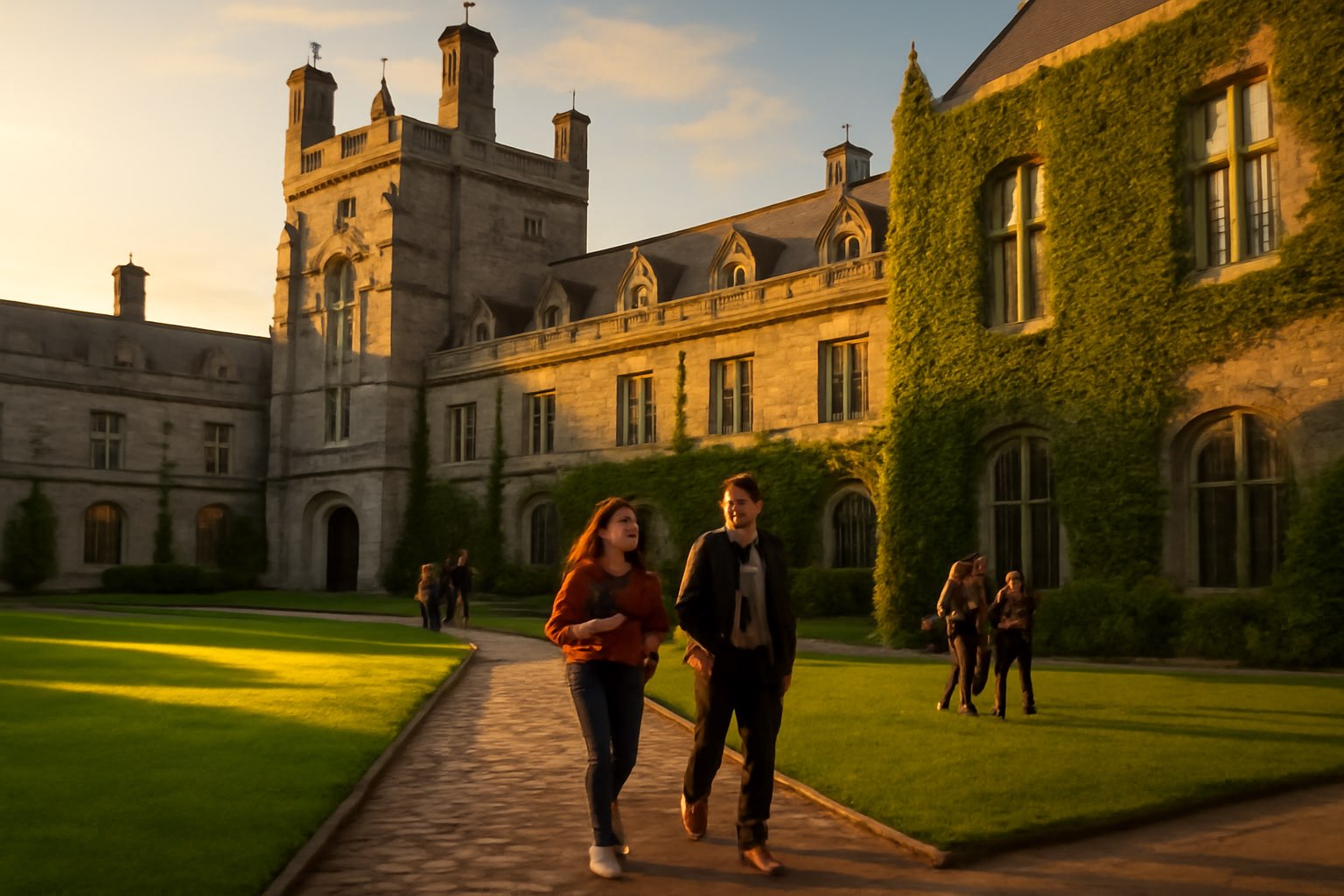
Understand the Irish education system. Explore Junior Cycle, Senior Cycle, Transition Year, and international comparisons.
Understanding the Junior Cycle
The Junior Cycle marks the beginning of secondary education in Ireland, encompassing students aged 12 to 15. This stage is crucial as it lays a strong academic foundation, offering a broad curriculum that includes core subjects such as English, Irish, Mathematics, and a modern European language. Students have the opportunity to explore a wide range of electives, which can include the sciences, humanities, and arts. The aim here is not only to provide academic knowledge but also to nurture critical thinking and communication skills.
Recent reforms have shifted the focus of the Junior Cycle towards a more integrated learning approach. Instead of relying solely on traditional written exams, the system now includes classroom-based assessments, fostering a more holistic evaluation of a student's abilities. This change benefits international students by allowing them to adapt to the Irish education model through a more gradual and supportive process. For example, a student from China might find the transition smoother with continuous assessments rather than facing the pressure of high-stakes exams from the outset.
Another essential aspect of the Junior Cycle is the Junior Cycle Profile of Achievement (JCPA), which records a student's performance across various dimensions, including classroom-based assessments and written exams. This comprehensive profile provides a detailed understanding of a student’s progress, allowing parents and educators to tailor support to individual needs. Families considering Ireland for their children's education will appreciate this balanced approach, which combines academic rigour with personal development.
The Unique Transition Year Experience
Transition Year (TY) is a distinctive feature of the Irish educational landscape, designed for students aged 15 to 16. Unlike the pressure-filled years preceding and following it, TY is a non-exam-focused year intended to develop students' maturity and broaden their horizons through diverse experiences. This year offers a unique opportunity for students to engage in work experience, community service, and other developmental programmes, encouraging them to explore interests beyond the traditional classroom setting.
For international families, especially those coming from education systems with a strong emphasis on continuous assessment, TY offers a refreshing break. It provides a valuable period for students to adjust culturally and academically to a new environment. In many Irish schools, students participate in mini-company programmes where they can develop entrepreneurial skills by creating and managing small businesses. Such programmes are particularly appealing to families who value practical learning and real-world skills over rote memorisation.
Participation in TY is not mandatory in all schools, but it's highly recommended due to the numerous benefits students derive from it. The year serves as a bridge, preparing students for the Senior Cycle by allowing them to develop self-awareness and confidence. Notably, students who complete TY often show improved performance in the Leaving Certificate and tend to possess better coping strategies for the demands of higher education. This year is seen more as an investment in personal growth rather than a hiatus from academic learning.
Navigating the Senior Cycle
The Senior Cycle represents the final two years of secondary education in Ireland, typically covering ages 16 to 18. This stage is pivotal as it prepares students for the Leaving Certificate, which is crucial for university admission. During these years, students select six to eight subjects from a wide array of options, including languages, sciences, and humanities. Each subject offers two levels: Ordinary and Higher, with higher-level subjects providing more points for university entry.
The diverse subject offerings in the Senior Cycle allow students to tailor their education according to their interests and future aspirations. For example, a student interested in medicine might focus on Biology and Chemistry, while another leaning towards business could choose Economics and Accounting. This flexibility is a significant draw for international families, who appreciate the ability to customise education paths to suit individual goals.
In addition to academic subjects, the Senior Cycle encourages independent study and critical thinking. This focus on self-directed learning is designed to equip students with the skills needed for success in university and beyond. The importance of subject selection cannot be overstated, as it directly impacts university eligibility. Guidance counsellors in schools play a vital role in helping students make informed choices, ensuring they align with their higher education ambitions.
Irish Education Philosophy: A Holistic Approach
One of the hallmarks of the Irish education system is its holistic approach to student development. Unlike many international counterparts that prioritize academic achievement above all else, Ireland's system values the all-round development of young people. This philosophy is evident in the emphasis on extracurricular activities, which are considered integral to school life. Sports, music, drama, and debate are encouraged, contributing to a well-rounded educational experience.
The Irish education system fosters an environment where critical thinking and problem-solving are paramount. This approach contrasts with rote learning models prevalent in some other countries. In Ireland, students are taught to understand and analyse information, evaluate arguments, and construct well-reasoned conclusions. Such skills are highly valued in today's dynamic global job market, making Irish-educated students well-prepared for international challenges.
Inclusivity is another cornerstone of Irish education. Schools offer robust support systems for students with additional needs, including those adapting to a new education system. English language support, pastoral care, and guidance counselling are commonly available, ensuring that all students, regardless of background, can thrive in their educational journey. Families moving to Ireland will find these support mechanisms particularly reassuring, as they ensure a smooth transition and integration for international students.
International Comparisons: Ireland vs. Other Systems
When evaluating the Irish education system, international families often compare it to other English-speaking countries like the UK, the US, and Australia. While there are similarities, such as the age at which students transition between education levels, significant differences set Ireland apart. For instance, the UK's system emphasizes early specialization, with students focusing on three or four subjects in A-Levels. In contrast, Ireland's Senior Cycle allows for a broader subject range, encouraging a more comprehensive education.
Compared to the US, where secondary education often includes Advanced Placement (AP) courses for college credit, Ireland's system provides a more unified path with the Leaving Certificate. This exam is universally accepted by Irish universities and recognized internationally, providing clear entry points into higher education. For families from China or other Asian countries, where intensive testing is a norm, the Irish model offers a balanced alternative that combines academic rigour with personal development.
Another distinctive feature is the Transition Year, a concept not commonly found in other education systems. This year of exploration and growth is often seen as a luxury in more exam-centric regions but is a valued component of the Irish approach. It reflects the country's commitment to developing well-rounded individuals, a factor that is increasingly important in today's interconnected world. Families prioritizing holistic education often find Ireland's system aligns well with their values.
Challenges and Considerations for International Families
While the Irish education system offers numerous benefits, international families should be aware of potential challenges. Language can be a barrier, especially for students whose first language is not English. However, most schools offer robust English language support programmes to aid adjustment. Additionally, adapting to a new educational culture with different expectations and teaching styles can take time, requiring patience and open communication between families and schools.
Irish education also involves navigating practical considerations, such as school enrolment deadlines and understanding the nuances of the application process. Families should start researching early and consider engaging with local experts or consultants who can provide personalised advice and assistance. This proactive approach can help alleviate stress and ensure a smooth transition for students and their families.
It's also important to recognize that while the Transition Year is highly beneficial, it may not be available in every school. Families should inquire about the availability and structure of TY in prospective schools to make informed decisions. Despite these challenges, many international families find that the benefits of the Irish education system—such as its holistic philosophy, flexibility, and international recognition—outweigh the hurdles, making it an attractive option for their children's education.
The Future Outlook of Irish Education
Looking forward, the Irish education system is poised to continue evolving in response to global educational trends and the needs of its students. Recent reforms, particularly in the Junior Cycle, indicate a shift towards more integrated and skills-based learning, which aligns with the demands of the modern workforce. As digital literacy becomes increasingly essential, Irish schools are beginning to incorporate more technology-focused subjects and programmes into their curricula.
Additionally, Ireland's commitment to inclusivity and diversity is expected to strengthen, supporting a more international student body. This focus is likely to include enhanced language support and cultural integration programmes that will benefit international students and prepare local students for a globalised society. These developments underscore Ireland's dedication to providing an education that is not only academically sound but also socially and culturally enriching.
The adaptability of the Irish education system is one of its greatest strengths, allowing it to meet the needs of a diverse student population while maintaining high educational standards. For international families, this adaptability ensures that Ireland remains a competitive and attractive destination for education. By continuously refining its approach, Ireland is well-positioned to equip students with the skills and knowledge necessary to succeed in a rapidly changing world.
About Peterson Family Office
Peterson Family Office Limited was established in Dublin in 2022, serving high-net-worth international families with a focus on education pathway planning, tax advisory, and long-term family strategy. Our philosophy — Professional · Disciplined · Long-term Commitment — guides every aspect of our work. We combine deep knowledge of the Irish and European landscape with a genuine understanding of the needs of families relocating from Asia and beyond.
Our three core service areas — Education Pathway Planning, the 1+1 Dual Mentorship System, and Family Office Services — work together to support families at every stage of their journey in Ireland. To learn more about how we can help your family, visit About Peterson Family Office.
Related Articles
Affordable Childcare Options for Working Parents in Dublin
Explore top affordable childcare options in Dublin for working parents, including quality preschools and after-school programs.
Childcare Facilities for Global Families in Dublin
Explore tailored childcare options in Dublin for international families, ensuring a smooth cultural transition.
Ireland University Admission Success Stories: Real Student Journeys
Discover real Ireland university admission success stories with students gaining entry to top institutions like Imperial and Oxford through strategic planning.